10 Tips to Choose Top Quality Sofas for Global Buyers

Choosing the right sofa across borders requires more than attractive photos and a low quotation. Global buyers must examine materials, construction, comfort, safety, and supplier reliability before placing an order. This guide, “10 Tips to Choose Top Quality Sofas for Global Buyers,” turns those concerns into practical checks.

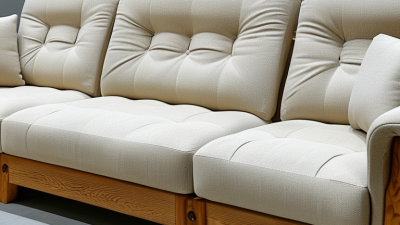
In my experience, a strong sofa begins with a stable frame. Kiln-dried hardwood, reinforced corners, and secure joints usually offer better long-term support. Sit on the sofa, if possible, and notice whether the cushions recover after pressure. High-density foam can improve durability, but comfort still depends on personal preference. Firm is not always better.

Look closely at the upholstery. Run your hand across the fabric and inspect stitching around corners, seams, and piping. Ask for material samples, foam specifications, frame details, and test reports. Reliable suppliers should explain their claims clearly. They should also provide consistent measurements, packaging information, warranty terms, and production photographs.

Small details matter.

International purchasing adds another layer of risk. Buyers should confirm carton protection, moisture control, container loading, delivery schedules, and after-sales procedures. Product labels and documents may need to meet the destination market’s requirements. Independent inspections can reveal loose legs, uneven gaps, weak stitching, or color differences before shipment.

No checklist is flawless. A beautiful showroom sample may not represent mass production. A trusted supplier may still make mistakes. Careful questions, written specifications, and staged quality checks create stronger protection. The following ten tips help buyers compare sofas with greater confidence, while remembering that genuine quality must be proven, not merely promised.

10 Tips to Choose Top Quality Sofas for Global Buyers

Define Quality Standards for Sofas in International Markets

Quality standards for sofas vary across international markets, so buyers need measurable criteria rather than attractive photographs. Start with the frame. Kiln-dried hardwood or well-engineered panels should resist movement, moisture changes, and repeated loading. Ask for material specifications, joint details, and independent test reports.

Comfort must also be tested consistently. A sofa should support the lower back without creating pressure behind the knees. Check seat height, depth, foam density, and recovery after compression. Sit for at least ten minutes. Short tests mislead. A cushion may feel soft today but lose shape quickly. In practical inspections, I compare several seats from the same production batch, not just one showroom sample.

Upholstery needs a clear performance standard. Request abrasion results, colorfastness data, seam strength, and cleaning instructions suited to the target market. Inspect hidden areas too. Loose threads often reveal rushed production. Hardware should operate smoothly, while packaging must protect corners during long-distance transport. Safety requirements, labeling rules, chemical restrictions, and fire-performance standards differ by destination, so documentation should match each market. A common mistake is trusting a certificate without checking its scope, test date, or issuing laboratory. Buyers should record defects with photographs and written measurements. Some decisions still involve judgment, especially firmness and visual appeal. That is where careful sampling matters.

Evaluate Frame Construction, Materials, and Structural Strength

Global buyers should inspect the sofa frame before judging its fabric or color. A kiln-dried hardwood frame usually resists movement better than poorly sealed timber. However, species alone proves little. Check corner blocks, joint alignment, screw placement, and visible gaps. A perfect-looking joint can still hide weak particleboard.

The USDA Forest Products Laboratory’s Wood Handbook explains that wood strength changes with moisture content. Ask suppliers for moisture-control records, especially when furniture crosses humid or dry regions. BIFMA X5.4-2020 includes repeated-load, impact, and stability tests for lounge seating. Request the complete laboratory report, including test loads and failure points. “Passed testing” is too vague. Seat cushions also need careful assessment. High-density foam often supports shape longer, but density is not the same as comfort. Sit near the edge and center. Notice creaking, frame flex, and uneven recovery.

Fabric abrasion data needs cautious interpretation. Martindale results can help compare textiles, yet testing methods and rating systems differ across laboratories. The Furniture Industry Research Association advises evaluating abrasion alongside seam strength, snag resistance, and actual use conditions. Ask whether the reported figure came from a finished cover or loose fabric. This detail is often missed. Check plywood thickness under the seat, spring attachment, and the underside dust cover. Staples should sit evenly, not pull through soft wood. Independent inspection costs less than replacing a container of unstable sofas. Yet no checklist is perfect; climate, shipping vibration, and daily misuse can expose weaknesses that showroom testing misses.

10 Tips to Choose Top Quality Sofas for Global Buyers

Evaluate frame construction, materials, and structural strength

How to read this chart: The bars show midpoint reference values from commonly used furniture-buyer specifications. Check solid or engineered wood moisture content, panel thickness, foam density, upholstery abrasion resistance, joint reinforcement, load capacity, cushion recovery, stitching quality, finish consistency, and supplier test documentation before purchasing. Requirements may vary by market, sofa type, and applicable safety standard, so buyers should request product-specific test reports.

Compare Cushion Support, Upholstery, and Long-Term Comfort

10 Tips to Choose Top Quality Sofas for Global Buyers

Cushion support determines how a sofa feels after one hour, not only during a showroom test. Look for high-resilience foam, layered with fiber or pocketed springs. The International Sleep Products Association reports that foam density strongly affects durability and pressure distribution, although sofa makers may use different rating systems. Ask for density details. “Soft” is not a technical specification.

Seat depth should match the buyer’s posture. A deeper seat may suit relaxed lounging, but shorter users can lose lumbar support. Test the cushion with both feet touching the floor. Then stand up. Uneven recovery suggests weak foam or poor filling control.

I once preferred a very soft sofa, but its cushions flattened noticeably within months. Comfort can mislead.

Upholstery needs measurable performance. FIRA guidance commonly treats 15,000 Martindale rubs as suitable for general domestic use, while heavier household use may require higher ratings. These figures help, but abrasion tests do not measure sunlight, pets, spills, or stitching quality. Check colorfastness, seam strength, removable covers, and cleaning instructions. The 2024 Grand View Research furniture report identifies durability and material quality as important market drivers, yet consumer reports still show that care requirements are often overlooked. A beautiful fabric can become impractical. Ask for test documentation, warranty terms, and replacement-cover availability before comparing prices.

Check Manufacturing Details, Safety Compliance, and Product Durability

When choosing sofas for international markets, inspect how they are made, not just how they look. Ask for the frame material, joint method, foam density, and fabric composition. Kiln-dried hardwood frames usually resist warping better than poorly seasoned timber. Reinforced corner blocks should be glued and screwed, not stapled alone. Lift the sofa slightly. Excessive flexing can reveal weak construction.

Safety paperwork deserves the same attention. Request current test reports for flammability, chemical emissions, fabric colorfastness, and structural loading. Requirements differ between countries, so confirm compliance with the destination market’s rules. Check whether the report matches the exact model, fabric, filling, and production site. A certificate for a similar sofa is not enough. Traceable batch records also help buyers investigate defects later.

Durability requires practical testing. Sit on every seat, press the arms, and inspect stitching around corners. Look for smooth recliner movement and firm, even cushions. Abrasion results can guide fabric selection, but laboratory figures do not predict every household. A busy showroom may expose weaknesses faster than a short factory demonstration. I once trusted attractive stitching and overlooked loose webbing underneath. That mistake was expensive. Ask about replacement covers, spare components, inspection records, and warranty limits. Clear answers often reveal more than polished samples.

10 Tips to Choose Top Quality Sofas for Global Buyers - Check Manufacturing Details, Safety Compliance, and Product Durability
Quality Tip Manufacturing Detail to Check Recommended Benchmark or Requirement Evidence to Request Buyer Benefit
1Inspect the frame construction Check kiln-dried hardwood or engineered wood components, reinforced corners, corner blocks, and securely fixed joints. No visible movement, cracking, or squeaking when the frame is loaded and twisted during inspection. Frame material declaration, construction drawings, assembly photographs, and an inspection report. Improves structural stability and reduces premature failure.
2Evaluate suspension quality Identify the suspension system, such as sinuous springs, webbing, or elastic belts, and check consistent spacing and anchoring. Even support across the seat with no loose, detached, or uneven suspension elements. Suspension specification, supplier data sheet, and seat-load test records. Helps prevent sagging and uneven seating comfort.
3Verify foam performance Review foam type, density, hardness, resilience, and whether seat and back cushions use different specifications. Seat foam density and firmness should match the intended use; the specification must be stated consistently on technical documents. Foam technical data sheet, density and hardness test results, and cushion construction details. Supports comfort retention and reduces cushion deformation.
4Check upholstery durability Assess fabric composition, abrasion resistance, seam strength, colorfastness, pilling, and resistance to snagging. Use a recognized abrasion method and disclose the test method; do not compare cycles from different methods as if they were identical. Textile test report covering abrasion, pilling, colorfastness, and seam performance. Provides a clearer indication of service suitability in homes, offices, or hospitality settings.
5Confirm fire-safety compliance Match the upholstery, foam, fillings, and complete sofa configuration to the destination market’s fire-safety rules. Compliance must be assessed for the finished product, not only for individual raw materials. Current third-party test reports, flammability declarations, and the exact tested material and construction specifications. Reduces regulatory, insurance, and market-entry risks.
6Review chemical safety Check restricted substances in leather, textiles, foam, adhesives, coatings, dyes, and metal parts. For European sales, verify applicable REACH requirements and any relevant national chemical restrictions. Material declarations, restricted-substance test reports, safety data sheets where applicable, and supplier compliance statements. Helps protect users and supports lawful import and distribution.
7Test stability and safety Inspect the center of gravity, leg attachment, anti-tip behavior, sharp edges, pinch points, and accessible fasteners. The complete sofa should pass applicable furniture safety and stability tests for its intended market and use category. Finished-product test report, stability assessment, safety checklist, and installation instructions. Reduces tipping, injury, and product-liability exposure.
8Measure dimensional consistency Compare approved samples with production units for overall size, seat height, seat depth, cushion gaps, leg height, and alignment. Define written production tolerances for dimensions, color, stitching, and visible alignment before mass production. Approved golden sample, dimensional control sheet, quality limit samples, and pre-shipment inspection records. Improves consistency across repeat orders and reduces installation or customer-service issues.
9Assess cleanability and maintenance Verify removable-cover construction, care-label accuracy, stain-cleaning limitations, leather finish, and replacement-part availability. Care instructions must reflect tested cleaning methods and must not promise resistance that has not been verified. Care-label artwork, cleaning test results, spare-cover or cushion availability, and maintenance instructions. Extends usable life and lowers long-term maintenance costs.
10Audit packaging and final inspection Check moisture protection, corner guards, carton strength, compression protection, labeling, and container-loading procedures. Perform a documented pre-shipment inspection and verify packaging after simulated handling or transport where required. Packing specification, carton test records, loading photos, inspection checklist, and defect-resolution report. Reduces transit damage, returns, and avoidable delivery costs.

Assess Supplier Reliability, Customization, Pricing, and Shipping Terms

Choosing a quality sofa begins with supplier reliability, not glossy photos. Ask for factory details, production capacity, inspection records, and export experience. Request recent photos of frames, stitching, foam, and carton protection. A video call can reveal working conditions and inventory. Check two trade references, then compare their answers with shipping documents. Small inconsistencies matter.

Samples should be tested for frame movement, cushion recovery, seam tension, and odor after unpacking. I prefer written specifications because memory changes during negotiations.

Customization needs clear limits. Confirm dimensions, fabric grades, foam density, leg materials, color codes, labels, and packaging drawings. Ask whether a prototype is included and who pays for revisions.

A sample may look excellent while the bulk order differs. That risk is real.

Approve a signed sample, tolerance sheet, and pre-shipment inspection plan. Do not accept “similar” when a buyer needs an exact shade or seat depth.

Compare pricing by total landed cost, not unit price alone. Include tooling, sample fees, spare covers, insurance, port charges, duties, and inland delivery. Request a line-by-line quotation with currency, validity, payment stages, and agreed delay procedures.

Shipping terms need equal care. Confirm Incoterms, loading port, carton dimensions, container capacity, estimated transit time, and supplied documents. Leave room for seasonal delays.

I have seen a cheap quote become expensive after destination fees appeared. That mistake is avoidable, though not always. Maintain a written change log and inspect before the balance payment.