
China Top Quality Made Sofas Manufacturers for Global Buyers
Choosing the right sofa manufacturer can shape a buyer’s reputation, delivery schedule, and long-term customer satisfaction. China has become a major sourcing destination for Quality Made Sofas, offering broad production capacity, skilled upholstery teams, and flexible customization. From compact apartment sofas to large sectional designs, Chinese factories serve retailers, hospitality projects, and furniture distributors worldwide.
Reliable manufacturers usually combine tested materials with controlled production processes. Buyers should examine kiln-dried wood frames, high-density foam, durable fabrics, reinforced joints, and accurate stitching. Factory audits, sample reviews, and clear inspection standards provide practical evidence of quality. Certifications may support confidence, but they should be verified rather than accepted without question. That matters.
Experienced exporters also understand packaging, container loading, moisture protection, and international documentation. A well-made sofa can still arrive damaged if corner protection is weak or cartons are poorly stacked. Professional suppliers often provide pre-production samples, production photographs, inspection reports, and after-sales communication. These details reveal how a factory works beyond its showroom.
Still, no manufacturer is perfect. Specifications can be misunderstood, colors may vary slightly, and delivery estimates can change during busy seasons. Honest buyers and suppliers should discuss these risks early. This guide introduces leading China sofa manufacturers for global buyers, focusing on craftsmanship, material transparency, customization ability, export experience, and dependable service. It also encourages careful comparison, because a low price alone does not prove lasting value. Good sourcing requires questions, evidence, and patience.
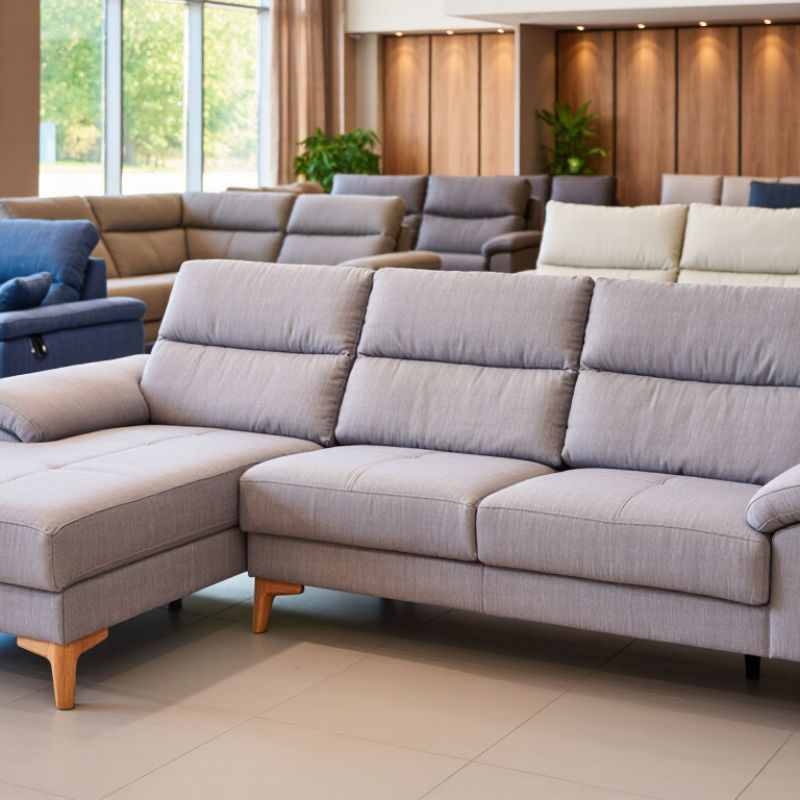
What Defines Top-Quality Sofa Manufacturing in China
Top-quality sofa manufacturing in China is defined by controlled details, not showroom appearance. A reliable factory traces timber, foam, fabric, and hardware by batch. It documents moisture readings, foam density, seam tolerance, and frame-joint inspections. Grand View Research valued the global furniture market at USD 516.66 billion in 2022. Its report forecasts a 5.2% CAGR through 2030. This growth increases pressure for repeatable quality among global suppliers. Strong manufacturers use incoming inspections, process checks, and final seating tests. They may reference EN 12520 or BIFMA durability methods. However, export volume alone does not prove quality. UN Comtrade data shows China remains a leading exporter of upholstered seating. Scale helps, but it can also hide inconsistent production.
Tips: Ask for a traceable bill of materials and dated inspection photos. Request foam density reports, fabric abrasion results, and load-test records. Check whether approved samples match mass-production materials. Sit repeatedly. Listen for clicks, frame movement, or uneven cushions. Confirm packaging tests and replacement-part procedures. Small gaps matter.
Quality also depends on technical communication. Drawings should state dimensions, stitch count, cushion firmness, color tolerance, and carton limits. ISO 9001 certification can support process control, but it does not prove comfort or durability. In factory evaluations, simple records often reveal more than polished tours. A missing test log deserves attention. No factory is flawless. The better question is whether defects are measured, corrected, and prevented from returning.
China Top Quality Made Sofas Manufacturers for Global Buyers - What Defines Top-Quality Sofa Manufacturing in China
| Quality Dimension | Typical Top-Quality Manufacturing Practice | Measurable Reference or Target | Why It Matters to Global Buyers | Recommended Verification Evidence |
|---|---|---|---|---|
| Frame Construction | Kiln-dried solid wood, engineered wood, or a documented combination with reinforced joints and load-bearing corner blocks. | High Priority Frame materials, moisture control, joint method, and internal reinforcement should be documented for each model. |
A rigid, properly joined frame reduces structural movement, squeaking, and premature failure during long-term use. | Material specification, production photographs, frame inspection records, and pre-shipment inspection report. |
| Foam Density and Resilience | Seat cushions use high-resilience foam or a tested multilayer construction matched to the intended comfort level. | Common quality ranges include approximately 30–40 kg/m³ for many premium seat applications, subject to design and local standards. | Foam density affects support, shape retention, sitting comfort, and service life. Density alone does not define total comfort. | Foam technical data sheet, density test report, compression or resilience test results, and approved sample. |
| Upholstery Materials | Fabric, microfiber, or leather is selected according to abrasion, colorfastness, cleanability, and intended commercial use. | For upholstery fabric, a buyer may specify a suitable Martindale abrasion target; commercial-use requirements are often higher than residential use. | Correct material selection helps prevent rapid pilling, fading, surface wear, and inconsistent appearance between production batches. | Material composition, abrasion test, pilling test, colorfastness report, and approved color swatch. |
| Dimensional Accuracy | Cutting, sewing, foam shaping, and final assembly are controlled against approved technical drawings and golden samples. | Define dimensional tolerances in the product specification; a common purchasing approach is to set tighter tolerances for visible and connecting parts. | Consistent dimensions are essential for modular sofas, sectional alignment, retail photography, and installation at the buyer’s destination. | CAD drawings, signed sample approval, in-process inspection records, and final measurement report. |
| Stitching and Upholstery Finish | Even seam allowance, consistent stitch length, reinforced stress points, clean corners, and controlled pattern matching. | Inspection should cover loose threads, skipped stitches, puckering, wrinkles, uneven piping, and visible surface defects. | Finishing quality strongly influences perceived value and reduces customer complaints after delivery. | Approved workmanship standard, defect classification guide, sample photos, and random carton inspection. |
| Functional and Load Testing | Completed products are checked for seating stability, recliner or sleeper operation where applicable, and structural integrity. | Testing methods and loads should follow the destination market’s applicable furniture standards or the buyer’s written test protocol. | Testing helps identify instability, mechanism failure, excessive noise, and damage risks before shipment. | Test method, equipment calibration record, test results, corrective-action report, and third-party laboratory report when required. |
| Safety and Chemical Compliance | Materials and finished products are assessed against the legal and chemical requirements of the target market. | Requirements vary by destination and may cover restricted substances, flammability, formaldehyde, heavy metals, and packaging materials. | Compliance reduces customs, retailer, recall, and liability risks. A certificate is valid only for its stated product scope. | Current test reports, declarations of conformity, material bills, laboratory accreditation details, and traceability records. |
| Customization Capability | Professional manufacturers manage changes to dimensions, upholstery, foam, stitching, functions, packaging, and branding-free specifications. | Every change should be recorded in a revision-controlled specification and confirmed with a pre-production sample when necessary. | Clear engineering control prevents unauthorized substitutions and makes repeat orders more consistent. | Technical drawing, bill of materials, sample approval form, change-control record, and production sign-off. |
| Quality Control System | Incoming-material inspection, first-piece approval, in-process checks, final inspection, and corrective-action procedures are documented. | Best Practice Inspection checkpoints should cover materials, dimensions, appearance, function, quantity, and packaging. |
A documented system is more reliable than relying only on final visual inspection or verbal assurances. | Quality manual, inspection checklists, nonconformity records, calibration certificates, and audit results. |
| Production Lead Time | Lead time is planned after material approval, order confirmation, capacity review, and deposit receipt. | Many made-to-order sofa projects require several weeks; the actual schedule depends on customization, material availability, order volume, and season. | Accurate planning supports retail launches, container booking, warehouse capacity, and project installation dates. | Production schedule, critical-path plan, material availability confirmation, and shipment-readiness report. |
| Packaging and Export Protection | Products use suitable protection for corners, upholstery, legs, mechanisms, moisture exposure, stacking, and container handling. | Packaging should be validated through handling or transit-risk assessment and adapted to the shipping route. | Effective packaging reduces compression marks, abrasion, contamination, moisture damage, and transit claims. | Packaging specification, carton markings, loading plan, drop or handling test where appropriate, and loading photographs. |
| Traceability and After-Sales Support | Finished goods can be linked to order details, material batches, inspection records, and replacement-part information. | Buyer-Controlled Agree on response time, spare-part availability, defect handling, and warranty terms before purchase. |
Traceability speeds up root-cause analysis and makes replacement or corrective action more efficient. | Lot codes, production records, warranty document, spare-part list, complaint procedure, and service contact process. |
| Sustainability and Material Transparency | Manufacturers disclose material composition, wood source information where applicable, waste controls, and packaging choices. | Claims should be supported by relevant, current documentation rather than broad terms such as “green” or “eco-friendly.” | Transparent sourcing supports retailer requirements, environmental reporting, and responsible purchasing decisions. | Material declarations, supplier documentation, recycled-content evidence, wood certification where applicable, and waste records. |
Note: The reference values and practices above are purchasing benchmarks rather than a universal certification standard. Buyers should confirm the applicable furniture, chemical, flammability, labeling, and packaging requirements in the destination market before placing an order.
Related Posts
-
What Are the 2026 Top Quality Sofas?
-

Exploring the Unique Features and Advantages of Best Mobility Sofas for Every Lifestyle
-

Discover Top-Quality Sofas from a Leading Chinese Manufacturer for Global Buyers
-

7 Reasons Why Mobility Sofas Are the Ultimate Living Room Upgrade
-

Discover the Ultimate Comfort with Our Exclusive Top Quality Sofas Collection
-

2025 How to Choose Quality Sofas for Ultimate Comfort and Durability