
What Is Wooden Furniture and How to Source It?
Wooden Furniture is more than a table, chair, or cabinet made from timber. It reflects material quality, forest management, design skill, and manufacturing discipline. The global furniture market remains substantial, while wood continues to dominate many residential categories. CSIL’s World Furniture Outlook reports that global furniture consumption exceeds one trillion U.S. dollars annually. Its findings show why sourcing decisions affect cost, availability, and environmental performance.
The material tells a story.
Solid oak feels dense beneath a hand. Veneer reveals a thinner wood layer over a stable core. Engineered panels can reduce waste, but their adhesives and emissions require careful review. The Forest Stewardship Council (FSC) explains that certification can support responsible forestry and supply-chain traceability. However, a logo alone is not enough. Buyers should verify certificate numbers, species names, moisture standards, finishes, testing records, and production locations.
George Nakashima, a respected woodworker and furniture designer, wrote, “The woodworker must search for the spirit of the tree.” That idea remains practical today. Good sourcing respects both the tree and the buyer’s requirements. Ask suppliers for joinery photographs, sample panels, packaging details, and replacement policies. Inspect a sample under natural light. Check the drawer movement. Notice rough edges and uneven color.
Mistakes happen.
A polished catalog can hide weak construction. A low quote may exclude inspection, duties, or delivery damage. This guide explains what Wooden Furniture includes and how to compare suppliers with greater confidence. It also acknowledges an uncomfortable truth: sustainable sourcing is rarely perfect. Better documentation, honest questions, and repeat inspections create more reliable decisions.
What Is Wooden Furniture?
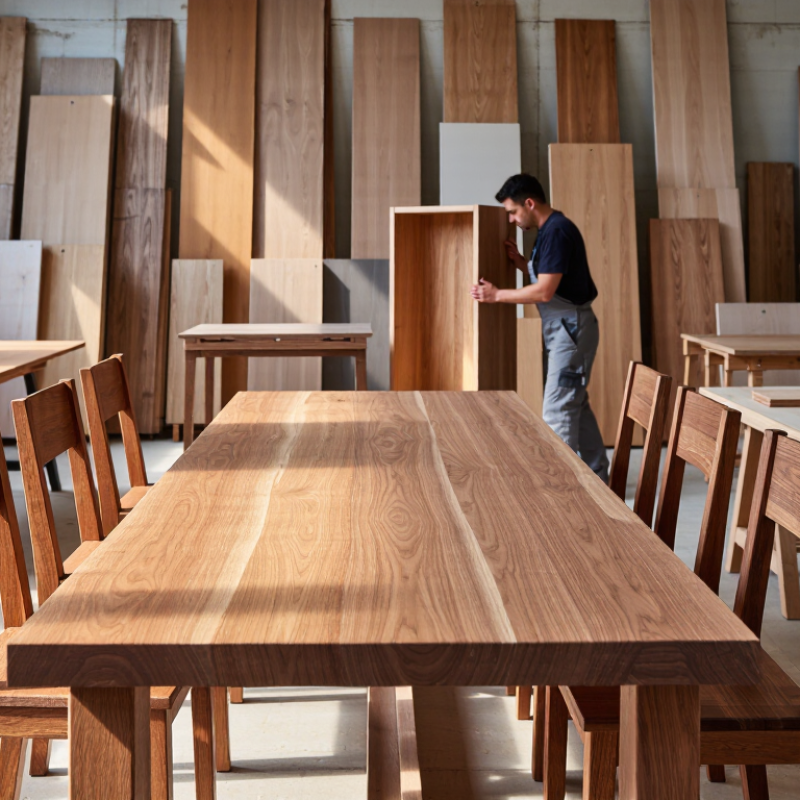
Wooden furniture is furniture made partly or mainly from natural wood or wood-based materials. It includes tables, chairs, beds, cabinets, and shelving. Solid wood uses timber throughout the main structure. Veneer uses a thin layer of real wood over a stable core. Engineered wood combines wood fibers, particles, or layers under pressure. The difference matters because each material responds differently to moisture, weight, and daily use. Grain tells a story. A walnut tabletop feels warm, while a pine cabinet may show knots and softer edges.
From practical inspection, construction often reveals more than appearance. I check whether joints fit tightly, drawers slide evenly, and chair legs sit firmly on the floor. A drawer made with strong corner joints usually lasts longer than one held mainly by staples. Wood also expands and contracts with humidity. Small seasonal gaps can be normal. Large cracks suggest poor drying or storage. I once trusted a flawless finish too quickly; later, weak joinery became obvious. A perfect surface can hide problems.
Reliable sourcing begins with clear questions. Ask for the wood species, material composition, manufacturing location, and moisture-control process. Confirm that coatings meet applicable indoor safety requirements. For engineered panels, request information about formaldehyde emissions. Responsible suppliers should explain legal timber sourcing and provide credible documentation when available. I also examine the back, underside, and unfinished edges, not only the visible face. Those details often reveal whether the piece is genuinely well made.
What Is Wooden Furniture and How to Source It?
| Data Dimension | Typical Examples | Key Characteristics | Sourcing Considerations |
|---|---|---|---|
| Basic Definition | Furniture made primarily from natural wood or wood-based panels | Used for seating, storage, sleeping, dining, and workspace applications | Confirm the percentage of solid wood, veneer, plywood, particleboard, or MDF used in each component |
| Main Construction Type | Solid wood, engineered wood, veneer, or mixed construction | Construction affects strength, stability, appearance, weight, and cost | Request a component specification sheet and confirm the thickness and grade of each panel |
| Common Hardwood Species | Oak, maple, beech, walnut, cherry, and ash | Generally dense and durable, with distinctive grain and color variation | Specify species, moisture content, visual grade, knot tolerance, and acceptable color variation |
| Common Softwood Species | Pine, spruce, fir, and cedar | Usually lighter and easier to machine, but generally more susceptible to dents and scratches | Check structural design, knot treatment, surface hardness, and protective finishing requirements |
| Engineered Wood | Plywood, medium-density fiberboard, and particleboard | Manufactured from wood fibers, strands, or veneers; offers consistent dimensions and efficient material use | Verify panel density, thickness, edge sealing, screw-holding performance, and moisture resistance |
| Typical Furniture Categories | Tables, chairs, beds, cabinets, bookcases, desks, benches, and storage units | Each category has different load, stability, safety, and assembly requirements | Provide intended use, dimensions, load capacity, packaging requirements, and assembly instructions |
| Joinery Methods | Mortise and tenon, dowels, screws, bolts, biscuits, and metal brackets | Joinery influences durability, repairability, appearance, and assembly time | Inspect joints on a sample and test for looseness, splitting, misalignment, and repeated assembly wear |
| Surface Finishes | Water-based lacquer, oil, wax, paint, stain, and polyurethane coatings | Finishes affect color, texture, stain resistance, moisture protection, and maintenance | Approve finish samples under standard lighting and check adhesion, gloss level, odor, and scratch resistance |
| Moisture Content | Often targeted around 6%–12% for indoor furniture, depending on climate and product requirements | Improper moisture levels can cause warping, cracking, shrinking, swelling, or joint failure | Define the acceptable moisture range and request inspection records or moisture-meter verification |
| Dimensional Requirements | Overall size, panel thickness, leg height, clearances, and assembly tolerances | Accurate dimensions support fit, safety, shipping efficiency, and consistent production | Use technical drawings with measurement tolerances, reference points, and approved sample dimensions |
| Quality Inspection Points | Wood species, structure, dimensions, finish, hardware, stability, and packaging | A systematic inspection reduces defects and improves consistency between production batches | Create a checklist with measurable acceptance criteria and inspect before shipment |
| Sustainability Information | Wood origin, recycled content, responsible forestry documentation, and material efficiency | Traceable materials can support environmental reporting and responsible purchasing policies | Request verifiable chain-of-custody documents, legal-harvest evidence, and material declarations |
| Safety and Compliance | Stability, tip-over resistance, sharp-edge control, chemical emissions, and load performance | Requirements vary by product type, target market, user age, and intended environment | Identify destination-market regulations and obtain relevant test reports before mass production |
| Packaging and Shipping | Flat-pack, partially assembled, or fully assembled packaging | Packaging influences shipping volume, damage risk, labor cost, and storage efficiency | Test drop protection, corner guards, moisture barriers, carton markings, and hardware organization |
| Recommended Sourcing Process | Define specifications, compare qualified suppliers, review samples, test quality, and approve production | A documented process improves product consistency and reduces cost and delivery risks | Use a written specification, signed sample approval, inspection plan, delivery schedule, and corrective-action procedure |
Related Posts
-

7 Essential Tips for Choosing Sustainable Wooden Furniture That Lasts
-

2026 Top Wooden Furniture Trends Buyers Need to Know?
-
Top 10 Wooden Furniture Manufacturers from China at the 137th Canton Fair
-

10 Surprising Benefits of Choosing Sustainable Wooden Furniture for Your Home
-
Discover the Ultimate Comfort of Home Chairs for Your Cozy Living Space
-

Exploring Market Trends for Top Quality Sofas at the 2025 China Import and Export Fair