
Cement-based materials can look solid while developing fine cracks beneath the surface. Alkali Resistant Fiberglass Mesh helps reinforce plaster, render, and other cementitious layers by distributing stress across a wider area. Its glass fibers are treated with an alkali-resistant coating, because ordinary glass can weaken when exposed to the alkaline conditions found in cement. Small details matter. Mesh openings, fabric weight, coating quality, and installation all affect how well the reinforcement performs.
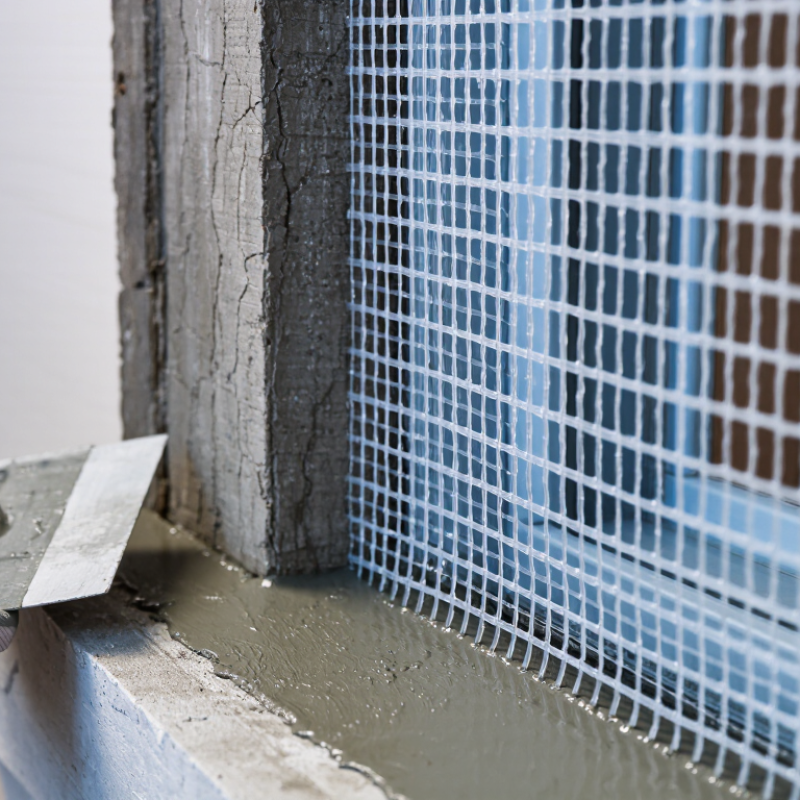
On a job site, the mesh is typically embedded into a fresh base coat, with enough overlap at seams and extra care around corners, openings, and transitions. A loose fold near a window can become a weak point. The material is not a cure for poor substrate preparation, excessive movement, or an unsuitable mortar. Not always. Results depend on the full wall system, the climate, and the installer’s technique. Product descriptions can also vary, so compare technical data sheets rather than relying on appearance alone. Look for stated tensile strength and retention after alkaline exposure, and confirm that the mesh is intended for the specific application. This guide explains why Alkali Resistant Fiberglass Mesh is used, what properties deserve attention, and where its limits should shape a sensible material choice. Even a good mesh cannot fix every detail. That is worth remembering.
Fresh cement mortar creates a highly alkaline environment, with pore water often reaching pH 12–13. Ordinary fiberglass can slowly lose strength in this chemistry. Hydroxide ions attack the glass surface and disrupt its structure. The damage may begin invisibly, long before a mesh looks worn. That is the tricky part. A wall can appear sound while embedded fibers are weakening.
As fibers degrade, they may become rougher and more brittle. Their ability to carry stress across small cracks can fall over time. The exact rate depends on glass composition, protective coatings, moisture, temperature, and mortar conditions. A coating can delay exposure, but it is not an endless shield. Alkali-resistant mesh uses glass formulated with improved resistance to cement alkalinity. It helps preserve reinforcement performance, though no mesh is immune to every installation or exposure problem. Details matter.
Tips: Check that mesh is specified for alkaline cement-based systems, not just general reinforcement. Keep it fully embedded in mortar, and avoid leaving it exposed at edges. If a product’s test data or intended use is unclear, ask for technical documentation. It is easy to overlook that step. Don’t guess.
Fresh cement is highly alkaline, and its pore solution can steadily attack ordinary glass fibers. Alkali-resistant glass addresses this exposure through its chemistry. ASTM C1666/C1666M specifies a minimum zirconium dioxide content of 16% by mass for AR glass fibers. That threshold matters. Zirconia helps the glass retain strength in alkaline cement surroundings, where untreated fibers may gradually weaken. In a wall render, this difference supports the mesh’s role in controlling cracking as the cement layer cures and experiences movement.
But zirconia is not a guarantee of long service life. Mesh performance also depends on proper embedment, adequate coverage, and careful curing. Look closely at a finished layer: fibers should sit within the render, not remain exposed at the surface. A compliant zirconia level is a useful specification to check, yet workmanship still counts. That is the less tidy part. ASTM’s composition requirement establishes a material benchmark; it does not, by itself, predict how every installed mesh will perform under different site conditions.
Alkali-resistant fiberglass mesh helps reinforce cement-based finishes, where moisture and high-pH materials can gradually weaken ordinary glass fibers. The important question is not just how strong the mesh feels when new. It is how much strength remains after alkaline exposure.
ASTM E2098 evaluates this change under controlled laboratory conditions. Mesh specimens are exposed to an alkaline solution, then tested to determine their tensile breaking strength. The result can be compared with the mesh’s strength before exposure, showing how well it retains its load-bearing capacity. Details such as specimen preparation and test conditions matter, so results should be interpreted using the applicable standard rather than casual comparisons.
That matters on site. A mesh strip may look intact, yet its fibers can lose strength unseen. Still, a laboratory result is not the whole story. Real walls also face installation stresses, moisture, temperature changes, and workmanship differences. ASTM E2098 offers a useful measure of alkali durability, but it cannot predict every field condition. A careful specification should consider the test result alongside mesh placement, overlap, and the surrounding finish system. A small weakness can matter.
Why Use Alkali Resistant Fiberglass Mesh?
How Mesh Aperture and Areal Weight Affect Crack Control in Cement Render
Cracks often begin where render dries unevenly: around window corners, over block joints, or beside a sun-warmed wall. Mesh helps spread tensile stress, but aperture and areal weight work together. Openings that are too small can restrict render penetration; openings that are too large may leave stress concentrated between yarns. There is no universal “best” mesh. Substrate movement and render thickness matter, too.
Areal weight, measured in g/m², indicates how much mesh material is present, but it does not prove strength or good embedment. Compare aperture size, tensile performance, and alkali-aged results on the product data sheet. EN 13496 provides test methods for mechanical properties of glass-fibre mesh used in external render systems. For alkali resistance, ASTM C1666/C1666M specifies AR-glass fibres with at least 16% zirconia. That figure concerns fibre composition, not a guarantee that a finished wall will remain crack-free.
Tips: Press mesh fully into fresh render, overlap adjoining sheets, and avoid wrinkles. Check the actual mesh-and-mortar combination on a small area; paper specifications can miss site conditions. A heavier mesh may help, but poor placement can undo the benefit.
| Representative Mesh Configuration | Typical Use | Crack-Control Contribution | Practical Considerations |
|---|---|---|---|
| 4 × 4 mm aperture 110 g/m² areal weight | Lightweight reinforcing layer in thin render or base-coat systems, where permitted by the system specification. | Fine openings distribute reinforcement relatively closely. The comparatively low areal weight provides modest reinforcement for minor surface movement. | Requires careful, continuous embedding. It is not a substitute for movement joints or correction of an unstable substrate. |
| 5 × 5 mm aperture 145 g/m² areal weight | General-purpose reinforcement in many exterior base-coat and cement-render applications. | A balanced option: the open structure allows render to pass through, while the greater mass than lightweight mesh can provide more reinforcement when correctly embedded. | Often selected as a general-purpose configuration; confirm compatibility with the render thickness and system manufacturer's requirements. |
| 5 × 5 mm aperture 160 g/m² areal weight | Applications calling for a heavier general-purpose mesh, subject to the specified render system. | More glass reinforcement per unit area than a 145 g/m² mesh of the same aperture, which may improve load distribution; actual performance depends on tensile properties and installation. | Ensure the mesh is fully surrounded by render and positioned within the specified layer, rather than left exposed or placed directly against the substrate. |
| 6 × 6 mm aperture 160 g/m² areal weight | Render systems designed for a coarser mesh opening and a heavier reinforcement fabric. | The heavier fabric can provide substantial reinforcement, while the larger openings may allow good render penetration when the material and application are suitable. | Check that the render aggregate and coat thickness are compatible with the aperture; a larger opening is not automatically better for every fine coat. |
| 4 × 4 mm aperture 160 g/m² areal weight | Situations where close mesh spacing and a heavier fabric are required by the system design. | Closely spaced strands can distribute reinforcement across smaller areas. The higher areal weight may add reinforcement, but does not by itself guarantee fewer cracks. | Close openings may affect render penetration and application. Follow the specified embedding method and avoid wrinkles, gaps, or overlapping ridges. |
Selection note: These are representative mesh configurations, not universal performance ratings. Aperture describes the approximate opening between strands; areal weight is the fabric mass per square metre. Use mesh specifically intended for cementitious environments, with verified alkali-resistant treatment or glass composition. Crack control also depends on substrate stability, render formulation and thickness, curing, mesh placement, overlaps, and movement-joint detailing. Check project specifications and the render-system supplier’s requirements before selection.
Alkali-resistant fiberglass mesh is commonly embedded in the base coat of ETICS and EIFS, where it helps reinforce the render over insulation boards. The cement-rich coating creates an alkaline environment, so ordinary glass mesh may weaken over time. A resistant coating helps the mesh retain its function. It is not structural reinforcement.
On site, installers press the mesh into fresh base coat until it is fully covered, rather than fixing it directly against the insulation. Extra reinforcing pieces are often placed diagonally at window and door corners, where cracks can start.
Mesh is also used in cement-based renders and repair layers on masonry. It helps distribute stress from shrinkage and minor movement, but cannot fix poor substrate preparation or replace movement joints. Small details matter.
Tips: Check that the mesh suits the specified system and mortar. Follow its guidance for overlaps, corners, and coverage. Avoid folds or exposed fibers. If cracks return, investigate the cause instead of adding another mesh layer.