
A clean pool takes more than a quick skim. Leaves settle in corners, fine grit gathers along the floor, and sunscreen can leave a faint ring at the waterline. A Robotic Pool Cleaner can handle much of the routine brushing and vacuuming, moving across the pool while collecting debris in its own filter. That helps. You may spend less time pushing a manual vacuum and more time checking the water and enjoying the pool.
The real value depends on your pool, your habits, and the cleaner you choose. Models vary in their ability to climb walls, clean waterlines, and manage steps or irregular shapes. Check the manufacturer’s guidance for your pool surface, and compare filter access, cable or battery design, and replacement-part costs. A robot does not balance chemicals, remove every floating leaf, or replace occasional manual attention. It is not magic, and that matters.
For a busy owner, fewer hours spent on routine cleaning may justify the upfront price. For a small pool with little debris, a simpler method might be enough. Think about how often you swim, how much tree litter lands in the water, and whether you will actually use the machine regularly. The answer is practical, not universal: a robotic cleaner can make pool care easier, but it works best as one part of a sensible maintenance routine.
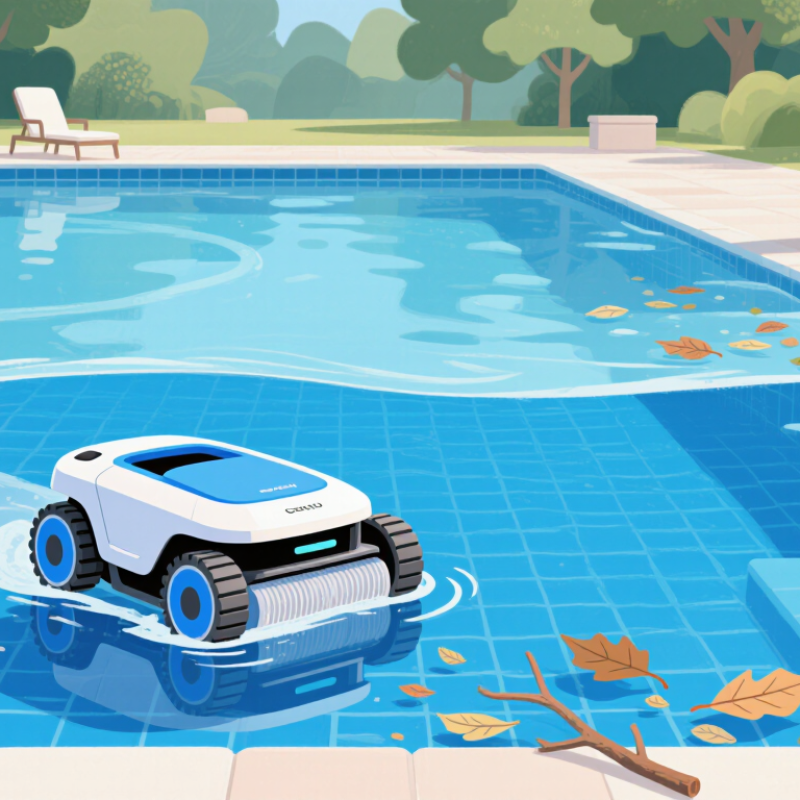
A robotic pool cleaner is a self-contained machine that travels underwater and collects dirt from pool surfaces. Unlike cleaners powered by a pool’s circulation system, many models use an onboard motor and filter basket. A power cable or rechargeable battery supplies energy, depending on the design.
Inside the cleaner, a pump draws water through the intake and traps leaves, grit, and fine debris in a removable filter. Rotating brushes loosen material from the floor and, on suitable models, the walls. Wheels or tracks help it move, while sensors or programmed patterns guide its route. It is not magic. A cleaner may miss tight corners, steps, or areas with tangled leaves, so check the basket and brushes regularly.
A clean filter matters. When it fills, water flow can weaken and cleaning may become less effective. Pool shape, surface texture, and debris size also affect results; one machine may not suit every pool. It does not balance water chemistry or replace the pool’s main circulation filter. That distinction is easy to overlook. A quick rinse after a cycle and occasional inspection of the cable, seals, and brushes can help reveal wear before performance noticeably drops.
A robotic pool cleaner is a self-propelled device that cleans underwater surfaces. Its drive system moves it around the pool, brushes loosen debris, and a pump draws water and debris through an onboard filter. Sensors or programmed navigation help guide its route. These functions often happen at the same time, and capabilities vary by model.
The bars show the simplified order of functions, not cleaning time, efficiency, or measured performance.
Robotic pool cleaners earn their keep by collecting grit, leaves, hair, and other debris before it settles into corners. Most use rotating brushes to loosen dirt while an onboard filter captures it. Their movement across the pool floor can also reduce the need for manual vacuuming. But performance depends on the pool’s shape, the debris, and the cleaner’s brush design. Fine sand may need a finer filter; larger leaves can fill a small basket quickly. No robot catches everything. Tile, vinyl, and fiberglass also differ in texture, so check that a cleaner is suitable for your pool surface before buying. Steps and tight corners may still need attention by hand.
The Pool & Hot Tub Alliance’s market data puts the U.S. residential pool base at about 10.7 million. That large, varied market is a reminder that pools do not share one layout or surface. The CDC’s 2023 Model Aquatic Health Code treats filtration and disinfection as separate controls. A robotic cleaner can remove physical debris, but it cannot replace water testing, circulation, or proper sanitizing. In practice, inspect its filter after a run and clear hair or leaves from the brushes. A missed patch is possible, especially around steps. That is a limitation worth accepting, not glossing over: robots reduce routine work, but they do not make pool care hands-free.
A robotic pool cleaner takes over repetitive work while you handle other pool tasks. Set it in the water, choose a cycle, and let its brushes loosen grit from the floor and walls. Many models collect leaves and fine debris in a removable filter basket. After swimming, that can mean less manual vacuuming and fewer trips across the pool with a pole. It is not magic. You may still need to skim floating leaves and check water chemistry.
Automation also makes cleaning easier to fit into a routine. A scheduled cycle can run while you prepare dinner or tidy the patio. The cleaner moves independently, so you do not need to guide a hose or monitor every pass. On a typical afternoon, even thirty minutes saved can make pool care feel less like a chore. Results depend on pool shape, debris load, and cleaner design; steps and tight corners may need attention.
Tips: Empty the filter basket after each run, especially during pollen season. Rinse it gently, and inspect the brushes for trapped hair or grit. Keep the cable untangled. One small drawback: carrying a wet cleaner can feel awkward, so lift it by its handle and let excess water drain first.
A robotic pool cleaner shifts some work away from the main circulation system, but it does not make ownership cost-free. The purchase price is only one part of the calculation. Check the filter basket, replacement brushes, and cable before buying; gritty leaves can fill a small basket quickly. Rinse the filter after each cycle, and inspect the brushes for wear. Small chores, but easy to forget.
Energy use depends on the cleaner’s rated wattage and cycle length. For example, a 150-watt unit running for three hours uses about 0.45 kilowatt-hours per cycle. Multiply that by your electricity rate and weekly schedule to estimate operating cost. The U.S. Department of Energy’s pool-pump guidance shows why the comparison matters: circulation pumps can use substantial electricity, but a cleaner’s use is separate. ENERGY STAR efficiency guidance applies to pool pumps, not robotic cleaners. Don’t assume a cleaner replaces filtration or circulation.
Budget for upkeep, too. A damaged cable or worn brush can turn a low-effort routine into a repair expense. I would leave room for that possibility; maintenance estimates often look neater on paper than beside a real pool. Before purchasing, compare the cleaner’s warranty terms, replacement-part availability, and stated power draw. Then calculate costs using your own utility rate, not a generic estimate.
| Factor | Robotic Cleaner | Suction-Side Cleaner | Pressure-Side Cleaner |
|---|---|---|---|
| Typical purchase price (USD) | About $500–$1,500 | About $100–$500 | About $300–$900 |
| How it is powered | An onboard electric motor and low-voltage power supply | The pool’s circulation pump and suction line | Pool return-water pressure; some setups use a booster pump |
| Typical electrical load while cleaning | Roughly 100–200 watts for many residential units | No separate cleaner motor; depends on the pool pump, commonly around 0.75–2.0 kW | No separate cleaner motor; a booster pump may use roughly 0.75–1.5 kW |
| Illustrative annual cleaner-related electricity use | About 54 kWh at 150 W, 3 hours per day, 120 days per year | Potentially substantial if the main pump must run extra hours; actual added use depends on the pool’s filtration schedule | About 270–540 kWh if a 0.75–1.5 kW booster runs 3 hours per day for 120 days |
| Illustrative annual electricity cost | About $11 at $0.20 per kWh under the example schedule | Varies widely; estimate only the pump electricity used beyond normal filtration time | About $54–$108 at $0.20 per kWh under the example schedule |
| Routine maintenance | Rinse the filter basket or cartridges after use; periodically inspect brushes, tracks, cable, and seals | Check hoses and connections; clear blockages and inspect the diaphragm or other moving parts | Clean the debris bag; inspect hoses, wheels, and the booster-pump system if fitted |
| Common replacement items | Filter elements, brushes, tracks, or seals, depending on use and water conditions | Hoses, diaphragms, flappers, or other wear components | Debris bags, tires, hoses, and wear components |
| Cleaning coverage | Many models clean the floor and may also climb walls or scrub the waterline; coverage varies by model | Usually focused on the pool floor; performance depends on pool shape and circulation flow | Often cleans the floor and collects larger debris; wall and waterline coverage varies |
| Potential advantage | Can clean independently of the pool’s main circulation system and may use less electricity per cleaning cycle | Typically the lowest initial cost and uses existing pool equipment | Can handle leaves and other larger debris, depending on the collection bag and setup |
| Best fit to consider | Owners prioritizing independent operation, programmable cleaning, and reduced reliance on pump runtime | Owners seeking a lower-cost option whose pool pump already runs during cleaning | Pools with frequent larger debris and owners comfortable maintaining the related pump equipment |
Estimates are illustrative U.S. ranges, not guaranteed prices or operating costs. Electricity examples assume $0.20 per kWh and 3 hours of cleaning per day for 120 days per year. Actual energy use and maintenance costs depend on equipment, pool conditions, local electricity rates, and whether pump runtime would otherwise be needed for filtration.
A robotic pool cleaner can be a worthwhile investment when your pool collects leaves, grit, or fine debris several times a week. It works independently, moving along the pool floor and, depending on the model, climbing walls. That can save time spent brushing and vacuuming, especially during busy swimming seasons. For a large pool, or one beneath trees, the saved effort may feel significant. For a small pool that stays clean, the benefit may be modest.
Tips: Check that the cleaner suits your pool’s surface and shape. Compare cleaning-cycle length, filter access, and cord handling. Empty the filter after use; a packed basket can reduce cleaning performance. Keep testing and balancing the water yourself.
Think about the real cost, not just the purchase price. Replacement parts, filter care, and electricity use can vary by model and usage. A cleaner also will not remove every stain or replace routine water care. It can feel like a luxury at first—and sometimes it is. A practical test is to note how much time you spend cleaning for a few weeks. If that chore keeps interrupting your weekends, automation may be worth paying for; if not, manual cleaning may still make sense.