
How to Choose the Right Round Plastic Nursery Pot

A round plastic nursery pot may look like a simple container, yet its size, drainage, and material can affect how reliably a plant grows. Choosing one is less about appearance and more about matching the pot to the plant’s roots, watering habits, and growing conditions. Small details matter.

A young herb with a compact root ball usually needs less volume than a fast-growing tomato seedling. An oversized pot can leave damp mix around sparse roots, while a tight pot may dry too quickly or restrict growth. Check that drainage holes are open and suitable for the surface where the pot will sit. Consider wall thickness, too. Thin plastic is light and easy to move, but it may flex under wet soil. Dark pots can warm quickly in direct sun, potentially affecting roots in hot conditions. These are practical trade-offs, not universal rules.

Before buying, compare the pot’s diameter, depth, capacity, and stability with the plant’s root ball and expected growth. Reused containers should be clean and free from cracks or blocked holes. Product descriptions do not always make dimensions easy to compare, so measure when possible. A pot that looks right on a shelf may feel awkward once watered. That is easy to miss. This guide explains how to assess the main features of a round plastic nursery pot and choose a suitable option for indoor or outdoor growing, without assuming one size fits every plant.
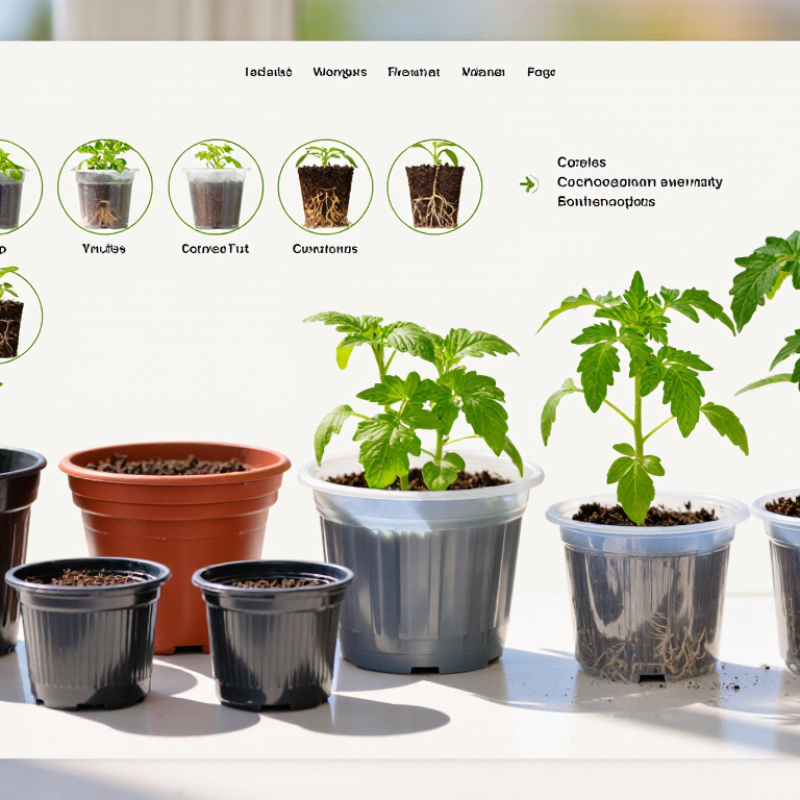
How to Choose the Right Round Plastic Nursery Pot

Identify the Plant’s Root System and Growth Stage

How to Choose the Right Round Plastic Nursery Pot

Identify the Plant’s Root System and Growth Stage

Start by checking the roots, not just the leaves. Slide the plant gently from its current pot and inspect the root ball. Fine, fibrous roots usually need room to spread, while a young plant with a small root plug can struggle in an oversized container. Woody plants may develop thicker roots that need extra depth. If roots circle tightly around the base, a slightly wider pot can help—but trimming or loosening them may also be needed.

Match pot size to the plant’s current stage, then reassess as it grows. A pot that is much too large holds unused, wet mix around a small root system; that can slow drying and raise the risk of root problems. USDA’s 2023 Floriculture Crops report recorded about $6.7 billion in U.S. floriculture sales, a reminder that healthy root systems matter across commercial production. That figure does not prescribe pot dimensions, though. Plant type, growing medium, and watering habits still matter. There is no perfect diameter for every plant.

Determine the Appropriate Pot Diameter and Depth

When choosing a round nursery pot, measure the root ball and the pot’s inside dimensions. Top diameter provides room for sideways root growth; depth matters for downward-growing roots and water storage. A useful starting point is a pot 1–2 inches wider than the root ball and at least as deep. For a 4-inch plug, a 5- or 6-inch pot may be a manageable step up. Small difference. Big impact.

Pot volume also affects growth. A meta-analysis by Poorter and colleagues, published in Functional Plant Biology in 2012, found that doubling pot volume increased plant biomass by an average of 43% across the studies reviewed. That figure is not a sizing formula: species, growing time, and conditions all matter. Still, it shows why a cramped pot can restrict growth.

Match the shape to the roots. Seedlings with a strong taproot need more depth; shallow, fibrous roots can use a wider profile. Avoid choosing a much larger pot just to delay repotting. When roots occupy little of the growing medium, it can remain wet longer, especially in cool or dim conditions. I would check the root ball again before ordering; pot labels may list the rim diameter, not the usable interior space.

Compare Plastic Types, Wall Thickness, and Weight

A round pot’s plastic type affects flexibility, weathering, and how it handles repeated lifting. Polypropylene is often light and fairly rigid, while polyethylene can feel more flexible under pressure. Recycled blends vary, so inspect the actual pot rather than relying on the material label alone. Look for an even rim, clean drainage openings, and no brittle spots. Feel the rim.

Wall thickness changes how a pot behaves when filled with damp mix. Thin walls are easier to carry and store, but may bow when roots press outward or when the pot is moved by its rim. Thicker walls generally resist flexing better, though they add weight and cost. For a small herb bench, that extra strength may not matter. For large shrubs moved across rough ground, it can.

Weight is a trade-off, not a quality score. A light pot is convenient for seasonal rearranging, but may tip more easily in wind, especially with a tall plant and a narrow base. A heavier pot can feel stable, yet becomes awkward after watering. Check the empty weight and test the filled pot if possible. That matters. There isn’t one perfect choice; I’d accept a little extra weight rather than discover a thin wall has split mid-season. This judgment depends on plant size, handling, and how long the pot must last.

Check Drainage Features and Watering Requirements

A round plastic nursery pot should let excess water escape freely. Check that its drainage holes are open, evenly spaced, and large enough to resist clogging with bark or fine roots. A pot can look well designed yet drain poorly when it sits flat on a solid tray. Small detail. Raise it slightly, then water over a sink or outdoors and watch the base. Water should begin leaving the holes soon after the mix is soaked. If it pools on the surface, the mix may be compacted, not just the pot poorly made.

Drainage and watering depend on the growing medium, too. UMass Extension’s greenhouse-media guidance describes typical mixes with about 10–20% air space and 50–60% water-holding capacity by volume. These figures show why roots need both moisture and oxygen; they are not a watering schedule for every plant. Match pot depth and hole area to the crop: thirsty seedlings may need more frequent checks, while drought-tolerant plants can suffer in persistently wet media. Feel the mix a finger’s depth below the surface before watering again. I still check twice. A quick drain test is useful, but it cannot reveal hidden compaction or tell you how fast a sunny bench will dry the pot.

Match Pot Durability and Reuse to Growing Conditions

How to Choose the Right Round Plastic Nursery Pot

Match Pot Durability and Reuse to Growing Conditions

A pot that works on a shaded bench may fail in full sun. Check its material, wall thickness, and UV-resistance information before buying. Thin rims can split when workers lift wet pots, while brittle plastic may crack after repeated cold-weather handling. Drainage matters, too: blocked holes leave roots sitting in water. Small details count.

Reuse can reduce replacement needs, but only when pots stay sound and suit the next crop. The U.S. EPA’s 2018 Advancing Sustainable Materials Management report estimated that 35.7 million tons of plastic entered U.S. municipal solid waste, with 8.7% recycled. That figure covers plastics overall, not nursery pots; local acceptance varies by material and facility. Reuse is not automatically the better choice if a pot is cracked, contaminated, or poorly matched to the growing cycle. I’ve found that rushed inspections miss hairline splits—easy to overlook, costly later.

Tips: Press the rim gently and check the base for cracks before reuse. Compare pot size with the root ball, and keep sturdy pots for repeated handling. Clean reusable containers under your crop’s hygiene procedures. Set aside damaged pots, then check whether your local recycler accepts that plastic type.

How to Choose the Right Round Plastic Nursery Pot - Match Pot Durability and Reuse to Growing Conditions

Pot Type Typical Construction Best Growing Conditions Durability Considerations Practical Reuse Guidance Good Choice When...
Thin-wall, flexible pot Lightweight molded plastic with flexible sides; often used for high-volume propagation and short-term nursery growing. Greenhouses, sheltered benches, and short production cycles. Easy to dent or split during handling. Repeated bending, cold weather, and prolonged outdoor exposure can shorten service life. Reuse only if the pot remains intact, drains freely, and can be cleaned and sanitized between plants. Low weight and low initial cost matter more than repeated reuse.
Standard injection-molded pot More rigid walls and a formed rim; commonly made from polypropylene or polyethylene. General greenhouse and outdoor nursery use, including routine watering and handling. Usually holds its shape better than a thin-wall pot. UV exposure, impact, and temperature extremes can still make plastic brittle over time. Often suitable for several growing cycles when stored out of strong sunlight and handled carefully; inspect before each reuse. You need a balance of sturdiness, availability, and potential reuse.
UV-stabilized outdoor pot Plastic formulated with additives intended to slow ultraviolet degradation. Exposed outdoor benches, sunny patios, and longer periods in direct sunlight. UV stabilization can help reduce sun-related brittleness, but it does not make a pot immune to weathering, impact, or wear. Reuse is reasonable while the walls, rim, and drainage openings remain sound; check for cracking and chalky or brittle areas. Pots will spend much of their service life outdoors or in strong sunlight.
Heavy-duty, thick-wall pot Thicker, more rigid construction designed to resist crushing and repeated handling. Large plants, frequent moving, transport, and nursery areas with higher handling demands. Generally more resistant to deformation than lightweight pots, though hard impacts and long-term sun exposure can still cause damage. Can be reused across multiple cycles if thoroughly cleaned and kept free of cracks that could trap soil or pathogens. Durability and repeated handling are priorities.
Recycled-content plastic pot Made partly or entirely from recovered plastic; stiffness and consistency vary with material and manufacturing. Routine nursery use when the pot’s rated strength and intended use suit the plant and handling conditions. Performance depends on the resin blend, wall thickness, and quality control—not recycled content alone. Assess each pot by condition rather than assuming a fixed reuse life; sort out damaged or brittle pots. Material sourcing is a consideration and the pot meets the required strength for its use.
Tall, narrow round pot Round pot with greater depth relative to its top diameter. Plants with deeper root systems, provided the potting mix and drainage suit the crop. Tall pots may be less stable on uneven surfaces, especially when empty or top-heavy. Reuse follows the same checks as other plastic pots; confirm that the base and drainage holes are not damaged. Rooting depth is more important than a broad footprint.

Selection tip: Pot service life varies with plastic formulation, wall thickness, sunlight, temperature, handling, and storage. Before reuse, remove old growing media, clean the pot, sanitize it using a method appropriate for the crop, and discard pots with cracks, damaged drainage holes, or brittle walls.