
How to Choose the Best Canvas Awnings for Global Buyers?
Choosing the right Canvas Awnings can influence comfort, energy use, and customer satisfaction across different markets. A sunny balcony in Dubai faces different demands than a rainy café terrace in London. Fabric weight, UV resistance, water repellency, frame strength, and ventilation all deserve careful attention. Appearance matters, but performance decides whether an awning remains useful after repeated exposure.
Global buyers also need to examine installation conditions, packaging, maintenance, and supplier support. A canvas that performs well in a dry climate may absorb moisture in a coastal environment. Salt air can gradually weaken fittings. Wind exposure can create additional stress. Small details matter. Experienced suppliers should provide clear material specifications, testing information, warranty terms, and installation guidance. Independent reviews and practical project references can strengthen confidence, although no document replaces careful product inspection.
There is no universal “best” option. That assumption often leads to expensive mistakes. Buyers should compare the awning with the building, climate, budget, and expected usage. A café may need quick operation and easy cleaning, while a home may prioritize color stability and quiet movement. Samples help reveal texture, stitching, and shade accuracy before a large order. Still, samples cannot show long-term weathering. This guide explores the main selection criteria for Canvas Awnings, while acknowledging an important limitation: product performance depends on correct installation and regular care. Careful decisions begin with realistic expectations.
Understanding Canvas Awning Types and Their Main Applications
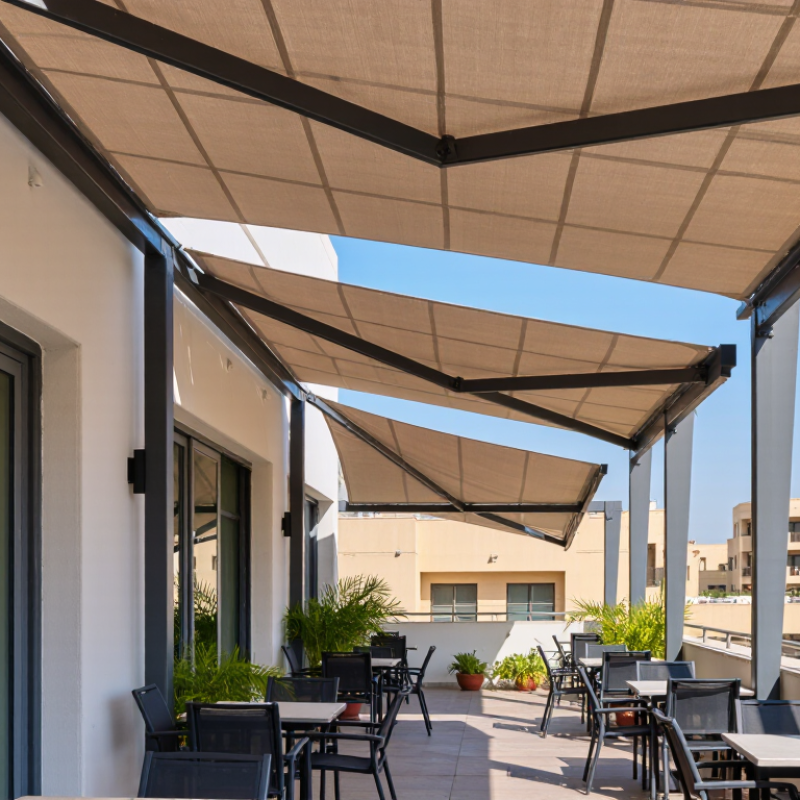
Canvas awnings come in several practical forms, and each suits a different setting. Fixed awnings provide stable shade over windows, doors, and outdoor walkways. They work well where protection is needed every day. Retractable awnings offer adjustable coverage for patios, balconies, and café seating. Their folding arms require careful installation and regular inspection. Dome awnings project a rounded profile, making them suitable for shopfronts and compact windows.
The canvas itself affects comfort and service life. Solution-dyed acrylic resists strong sunlight and usually keeps its color longer. Coated polyester can provide useful water resistance and easier cleaning. Cotton canvas feels natural, but it may need more maintenance in humid climates. Buyers should check fabric weight, UV performance, stitching quality, and frame corrosion protection. A pale fabric can reduce heat, while a darker one often creates stronger visual contrast.
Application conditions matter more than appearance alone. A coastal property may need corrosion-resistant hardware and frequent salt removal. In windy regions, a retractable model should close securely before severe weather. Measure the wall, projection, drainage path, and mounting surface before ordering. I have seen attractive awnings fail because installers ignored the wall structure. That mistake is easy to repeat. Local building rules, fire requirements, and wind ratings also deserve verification, because specifications vary between countries. Even experienced buyers can overlook maintenance access.
| Awning Type | Primary Fabric Construction | Typical Applications | Key Advantages | Main Limitations | UV Resistance | Water Resistance | Breathability | Recommended Climate | Typical Service Life* | Best Buyer Priority |
|---|---|---|---|---|---|---|---|---|---|---|
| Plain Cotton Canvas | Woven cotton fibers, usually treated with a water-repellent finish | Traditional storefront awnings, market stalls, patios, temporary outdoor shade, decorative residential projects | Natural appearance, good air circulation, comfortable shade, easy to print or customize | Can absorb moisture, may mildew if stored damp, and generally fades faster than synthetic fabrics | Moderate | Moderate when treated | High | Dry or seasonally mild regions; suitable where natural aesthetics are important | Approximately 3–8 years with proper care | Natural texture and traditional design |
| Acrylic-Coated Polyester Canvas | Polyester base fabric coated with acrylic on one or both sides | Retractable patio awnings, window awnings, balcony covers, residential and light commercial shading | Good dimensional stability, moderate color retention, lightweight construction, and broad color availability | Coating may wear after prolonged abrasion; less breathable than uncoated woven fabric | Good | Good to high | Moderate | Mixed climates with moderate to strong sunlight | Approximately 5–10 years with regular maintenance | Balanced cost, appearance, and performance |
| Solution-Dyed Acrylic Canvas | Acrylic fibers colored throughout before being spun and woven | Premium retractable awnings, hospitality terraces, restaurants, hotels, coastal homes, and high-sun-exposure applications | Strong color retention, good UV resistance, low water absorption, and good resistance to mildew growth | Higher purchase price; fabric can still be damaged by sharp objects, harsh cleaners, or improper tension | Excellent | Good to high | High | Hot, sunny, humid, or coastal environments | Approximately 8–15 years with suitable cleaning and storage | Long-term outdoor exposure and color stability |
| PVC-Coated Polyester Canvas | Polyester scrim coated with polyvinyl chloride on one or both sides | Commercial entrance canopies, industrial shelters, truck-side covers, event structures, and heavy-duty shade systems | High water resistance, easy cleaning, strong tear resistance, and suitability for large panels | Lower breathability, higher weight, possible heat buildup, and a more plastic-like surface appearance | Good to excellent | Excellent | Low | Wet climates, high-use commercial areas, and applications requiring weather protection | Approximately 7–15 years, depending on coating quality and exposure | Waterproofing, durability, and easy maintenance |
| PU-Coated Polyester Canvas | Polyester fabric coated with polyurethane, generally lighter and more flexible than PVC-coated fabric | Portable awnings, camping shelters, lightweight canopies, vehicle awnings, and temporary shade structures | Lightweight, flexible, compact for transport, and suitable for portable products | Coating can degrade under continuous UV exposure; may have lower abrasion resistance than heavier coated fabrics | Moderate to good | High | Low to moderate | Travel, seasonal use, and moderate outdoor exposure | Approximately 3–8 years, depending on exposure and handling | Low weight, portability, and compact storage |
| Fire-Retardant Canvas | Woven synthetic or natural fabric treated with a flame-retardant finish or manufactured with inherent flame resistance | Event tents, public-space canopies, hospitality venues, transport facilities, and projects with fire-safety requirements | Supports compliance with applicable fire-performance requirements and is available in multiple fabric weights | Fire performance depends on the specific standard, testing method, and certification; some treatments may reduce after repeated washing | Varies by fiber and finish | Varies by coating | Moderate to high | Public or commercial environments subject to local fire regulations | Approximately 4–12 years, depending on fabric and exposure | Documented fire performance and regulatory compliance |
| Mesh Canvas | Open-weave polyester or acrylic mesh designed to allow controlled airflow and visibility | Solar screens, pergola covers, balcony screens, outdoor seating areas, and wind-exposed locations | Reduces glare and solar heat while allowing ventilation; lower wind load than solid fabric | Does not provide complete rain protection; privacy and shade levels depend on openness factor | Good to excellent | Limited | Excellent | Hot, windy, and sunny regions where airflow is essential | Approximately 5–12 years with proper installation | Ventilation, glare reduction, and wind management |
| Marine-Grade Canvas | High-performance solution-dyed acrylic or coated polyester designed for severe outdoor exposure | Boat covers, waterfront awnings, yacht decks, coastal patios, and high-humidity outdoor installations | Strong resistance to sunlight, moisture, salt-air exposure, and repeated outdoor use | Higher material cost; requires correct tension, ventilation, and cleaning to prevent staining or corrosion of hardware | Excellent | High to excellent | Moderate to high | Coastal, marine, humid, and high-salinity environments | Approximately 8–15 years with marine-appropriate care | Salt-air resistance and severe-weather durability |