
Choosing quality Leather Furniture for global sourcing requires more than examining a showroom sample. It demands evidence about the hide, tanning process, construction, and long-term performance. CSIL’s World Furniture Outlook 2024 shows that furniture remains a major global manufacturing and trading sector, while market reports from IMARC Group identify leather furniture as a growing category influenced by premium residential and hospitality demand. However, published estimates vary. Definitions differ. That uncertainty deserves attention.
H. R. Procter, a respected leather technologist and author, wrote, “Leather is the skin of an animal preserved by tanning.” The material’s origin matters. Buyers should request hide grading details, country-of-origin records, and tannery information. A full-grain hide may display small scars, visible pores, and uneven color. Those marks are not automatically defects. They can indicate less aggressive surface correction. Still, appearance alone proves little.
The Leather Working Group’s technical and environmental reporting emphasizes responsible leather production, including chemical control, water management, and traceability. These factors should enter the supplier scorecard, not remain marketing language. Ask for current audit documents, test results, and production samples from the same material batch. Check seam density, frame joinery, cushion recovery, and finish adhesion. Sit on the chair. Inspect the underside.
A low price can be attractive. It can also hide thinner leather, weak foam, or unstable finishing. Mistakes happen. Even experienced buyers can overtrust certificates or polished samples. A practical sourcing decision combines laboratory evidence, factory visits, reference orders, and clear acceptance standards. Quality is not a single feature. It is verified performance over time.
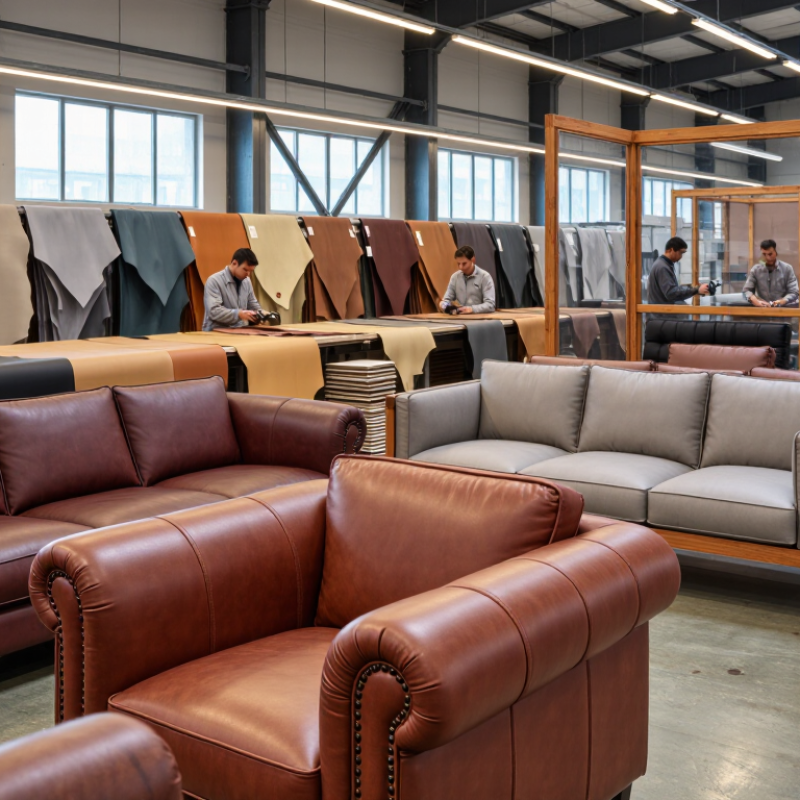
For global sourcing, leather quality begins before the sofa reaches a showroom.
A reliable standard covers the hide, finish, structure, comfort, and supporting records. Inspect the grain under natural light, not only under warm showroom lamps. Look for consistent color, restrained surface correction, and clean, tight pores.
Small scars are not automatically defects; they can show natural hide character. However, deep cracks, loose coating, and uneven dyeing deserve rejection. Ask for the leather type, thickness range, tanning location, and production date. Vague terms such as premium leather are not measurable.
Durability requires evidence, not confident promises.
Request test results for abrasion, flexing, colorfastness, seam strength, and finish adhesion. Match the test method to the intended market and furniture use. Dining chairs need different resistance from lightly used lounge seating.
Check the frame, foam density, webbing, and stitching as one system. A thick hide cannot rescue a weak frame.
During sampling, sit on each prototype, open every seam, and photograph defects. Record measurements and approved samples in a signed quality file. That file reduces disputes across languages and time zones.
Compliance documents also matter.
Confirm chemical restrictions, labeling rules, fire requirements, and import documentation for each destination. Use independent testing when supplier reports seem incomplete or unusually perfect. Traceable batch numbers help connect a finished chair to its source hides.
No checklist is perfect. Leather varies naturally, and inspectors can miss flaws when schedules become tight. Set acceptable limits in writing, then allow controlled judgment for natural marks. A useful standard is strict enough to protect buyers, yet honest about material variation.
Quality leather furniture begins with identifying the material, not trusting its sales label. Leather Naturally’s 2024 industry factsheet estimates that more than 1.5 billion hides and skins are processed annually. This scale creates wide quality differences. Full-grain leather keeps the natural grain and usually develops a deeper patina. Top-grain leather is lightly corrected, so it offers a cleaner surface and consistent appearance. Split leather comes from lower hide layers. It needs a strong finish or coating.
Look closely at the sample.
A reliable supplier should disclose the hide origin, tanning method, thickness, finish, and testing results. Ask whether “genuine leather” means solid leather or a coated split material. That phrase alone proves little. The Leather Working Group’s audit framework examines traceability, chemical management, water use, and production controls. These checks matter more than a polished showroom.
Synthetic alternatives require equal attention. PU-coated split leather may look convincing, but coating failure can appear around seat edges. PVC often feels stiffer and less breathable. Microfiber leather can perform well, though construction quality varies sharply. A 2024 materials market analysis by Textile Exchange reported that fossil-based synthetics still represented most global fiber production, reminding buyers to examine the full material system. I still treat every certificate carefully. Documents can be outdated. Small swatches can hide large problems. Examine the underside, seams, smell, grain variation, and surface response after gentle bending.
When sourcing leather furniture globally, inspect the frame before admiring the surface. A solid hardwood frame with reinforced corner blocks usually handles repeated movement better. Ask for construction drawings, material specifications, and photographs taken during production. Sit before judging.
Check the joints closely. Clean stitching, even seam spacing, and firmly attached webbing reveal production discipline. Lift one corner slightly; excessive twisting may indicate a weak frame. I once approved a chair that looked excellent in photographs, but its loose seat suspension appeared after several weeks. That mistake changed my inspection process. Comfort needs measurable details, not only attractive styling. Seat foam should support the body without feeling rigid. Layered foam and fiber can create a softer first impression, but excessive softness may reduce long-term support. Test the cushion after repeated sitting, not just for five minutes. Arm height, seat depth, and back angle also affect different body types.
Durability depends on leather selection and daily use. Full-grain leather often shows natural marks, while corrected surfaces may offer more uniform appearance. Neither choice automatically guarantees better performance. Examine the finish for cracking, color transfer, and uneven absorption. Request abrasion, flexing, and finish-resistance test results from the supplier. Review the testing method, not merely the claimed rating. A bright showroom can hide flaws. Inspect samples under neutral light, rub the surface with a clean cloth, and check the underside of cushions. Specifications can still be incomplete. Keep written approval samples, because production changes may occur after negotiation.
For global leather furniture sourcing, supplier verification must go beyond attractive samples. Visit the factory when possible. Check cutting rooms, stitching lines, drying areas, and finished-goods storage. Ask for batch records showing hide origin, tannery identity, and inspection dates. FAOSTAT data indicate that livestock hides and skins form a large global raw-material stream, making traceability a practical sourcing priority. A supplier should explain how each hide becomes upholstery, not simply claim “genuine leather.”
Request current certificates and verify their scope. Leather Working Group audit results can indicate environmental management, restricted chemical controls, and wastewater practices at tanneries. ISO 9001 supports quality systems, while ISO 14001 addresses environmental management. These documents matter, but they are not magic. A certificate may cover one site, one process, or an earlier audit period. Ask for expiry dates, corrective-action records, and the exact facility named. Textile Exchange’s Preferred Fiber and Materials Matrix also shows why material claims need evidence, not vague sustainability language.
Tips: Order a production sample, then inspect hidden areas. Check leather thickness, grain consistency, odor, seam tension, cushion recovery, and frame joints. Ask whether water-based finishes, recycled materials, or mixed hides are used. Keep photographs and signed specifications. The Sustainable Apparel Coalition’s Higg Facility Environmental Module demonstrates how site-level data can expose energy, water, and waste gaps; furniture buyers can request similar measurements. I still treat every audit as a snapshot. Unannounced checks and independent lab tests may reveal problems that paperwork misses.
When sourcing leather furniture globally, the lowest quoted price rarely shows the full cost.
A factory may offer a sofa at $420, yet sampling, inspection, inland transport, insurance, and port charges can add $110 or more. Leather grade changes the calculation. Full-grain hides cost more, but they often resist surface cracking better than heavily corrected leather.
Ask for a written material specification, including hide thickness, coating, foam density, stitching, and frame wood.
I have found that vague specifications create expensive arguments later. That lesson still matters.
Logistics can damage both margins and furniture quality.
A three-seat sofa needs careful carton measurement because unused container space becomes paid air. Confirm packed dimensions before ordering. Check moisture protection, corner guards, pallet rules, and loading photos.
Transit time also affects cash flow. A shipment delayed at a congested port may leave a retailer holding empty showroom space. Use realistic lead times, not the supplier’s best-case promise.
For repeat orders, compare freight quotes under the same Incoterm and currency. Otherwise, the cheaper offer may only shift costs to the buyer.
Global sourcing risks extend beyond visible defects.
Hide color can vary between batches, and replacement panels may not match. Fire, chemical, labeling, and wood-origin requirements differ across markets.
A pre-shipment inspection helps, but it cannot replace a reliable production record. Request test reports from an independent laboratory when regulations require them. Verify whether documents match the actual shipment.
I once treated a clean sample as proof of stable production; that was too optimistic.
Build a small trial order, retain reference swatches, and record approval photos. Even then, some uncertainty remains.