10 Cabinet Hinge Buying Tips for Global Buyers
Buying a Cabinet Hinge for international projects involves more than comparing unit prices. The correct choice affects door alignment, opening comfort, installation speed, and long-term maintenance. A hinge may look identical in a product photograph, yet differ in steel thickness, adjustment range, closing force, or cycle performance.
Julius Blum, founder of Blum, expressed a practical industry principle: “Furniture fittings should make everyday life easier.” That idea remains relevant for global buyers. A reliable Cabinet Hinge should support smooth movement, stable positioning, and predictable installation across different cabinet designs. It should also match the door overlay, panel thickness, opening angle, and mounting system.
Measure carefully.
Experienced buyers usually request technical drawings, samples, load information, and test results before placing large orders. They check whether the hinge survives repeated opening cycles, humid rooms, temperature changes, and uneven installation conditions. Finish quality matters too. A polished surface can hide weak plating or inconsistent tolerances.
Price can mislead.
A low-cost hinge may create higher expenses through callbacks, replacement parts, and delayed installation. However, premium pricing alone proves little. Suppliers should provide clear specifications, quality-control records, packaging details, and realistic production lead times. Certifications may also matter for specific markets and furniture applications.
Some decisions remain imperfect. Laboratory tests cannot reproduce every household, installer, or cabinet material. Therefore, buyers should test samples in real conditions before committing to container-level quantities. This guide presents ten practical buying tips for selecting a Cabinet Hinge with greater confidence, fewer surprises, and a more reliable ownership experience.
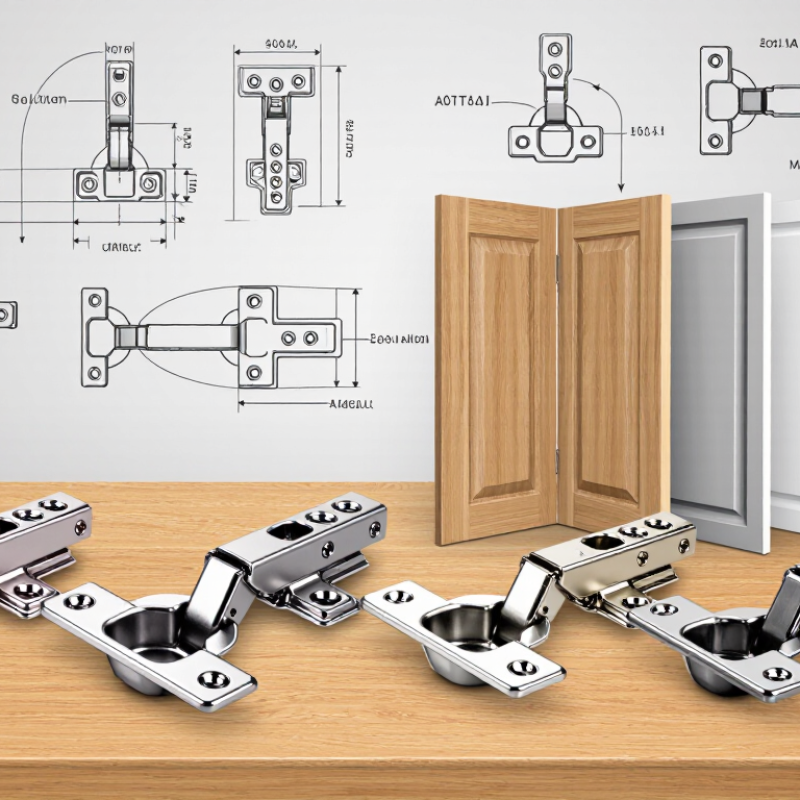
Define Cabinet Hinge Types and Their Suitable Applications
Choosing the right cabinet hinge begins with the door design, not the catalog photograph. Overlay hinges suit doors covering the cabinet side panels. Inset hinges fit doors inside the frame and demand accurate gaps. Half-overlay hinges work when two doors share one partition. Measure the door thickness, overlay distance, and opening angle before comparing prices. Small errors can cause rubbing, uneven reveals, and premature screw loosening. Measure twice.
For frequently used kitchen doors, a concealed hinge with an adjustable mounting plate offers practical alignment. Soft-closing models reduce impact on glassware and painted surfaces. They are useful in homes, hospitality areas, and fitted storage. A pivot hinge may suit tall, narrow doors or furniture requiring a wider swing. Glass-door hinges need compatible clamps or drilled-hole dimensions. Forcing a standard cup hinge is poor practice. For lightweight display doors, a compact surface-mounted hinge can simplify installation and future replacement. Do not select by appearance alone.
Global buyers should confirm corrosion resistance for humid kitchens, coastal housing, and laundry cabinets. Stainless steel construction may be appropriate, but coating quality and testing details still matter. Ask for cycle-test results, load guidance, screw specifications, and installation drawings. I have seen attractive hinges fail because the cabinet material was too soft for the supplied screws. That detail is easy to miss. Also check whether left- and right-opening versions are required. A sample installation can reveal noise, sag, and inconsistent closing before bulk purchasing. Yet one sample cannot represent every production batch, so inspection plans should remain realistic.
Match Hinge Features with Cabinet Design and Door Requirements
Cabinet hinges should match the door, not just the supplier’s price list. Start with the cabinet construction. Full-overlay doors need hinges with suitable overlay adjustment. Inset doors require tighter positioning and dependable depth control. Face-frame and frameless cabinets also use different mounting plates. Measure door thickness, height, width, and weight before ordering. A 35 mm cup is common, but it is not universal.
Door movement matters too. Wide doors may need three hinges instead of two. Tall pantry doors often require stronger load support and a larger opening angle. Soft-close hinges improve daily comfort, but their resistance must suit the door weight. Lightweight doors can stop short or close slowly. Heavy doors may still slam. Test a sample.
The Houzz 2024 U.S. Kitchen Trends Study reported that 76% of renovating homeowners upgraded their cabinets. That volume makes compatibility testing important, especially for global projects with varied materials and installation habits. Check corrosion resistance for humid kitchens, mounting screw length for thin panels, and adjustment range for uneven carcasses. ANSI/BHMA A156.9 provides recognized performance requirements for cabinet hardware, but certification does not replace a real door test. I have seen a technically compliant hinge fail because the plate position was wrong. Small gaps reveal large mistakes. Recheck the hinge after repeated opening cycles, not only after installation.
Evaluate Materials, Load Capacity, and Long-Term Durability
Cabinet hinges are small, but their material strongly affects service life. For global buyers, compare steel, stainless steel, and zinc alloy carefully. Cold-rolled steel usually offers good strength for standard indoor cabinets. Stainless steel performs better in humid kitchens, coastal homes, and commercial spaces. Zinc alloy can provide a clean appearance, but its strength depends on design and casting quality. Do not trust appearance alone. In practical inspections, poorly aligned hinges often fail before the metal shows visible damage. Installation quality matters.
Load capacity should include the door, glass panels, handles, and stored contents. A tall solid-wood door creates more stress than a small laminate door. Ask for tested capacity under the actual hinge quantity and mounting position. Check screw pull-out resistance, opening angle, and adjustment stability. Leave a safety margin. A hinge rated for a light door may sag quickly when users add heavy items. This is easy to overlook.
Long-term durability requires more than a cycle-test number. Review corrosion testing, coating quality, spring performance, and temperature tolerance. For humid regions, inspect exposed edges and concealed metal surfaces. Request clear test conditions and production records. Some tests use ideal doors and perfect installation. Real cabinets are less forgiving. Packaging also matters because bent hinge plates may pass inspection but fail during fitting. Samples should be installed, loaded, and opened repeatedly before a large order. That small trial can reveal noise, loosening, or uneven closing.
10 Cabinet Hinge Buying Tips for Global Buyers: Key Performance Targets
The chart presents practical procurement benchmarks for cabinet hinges: corrosion resistance should be validated with salt-spray testing, load capacity should be checked per hinge under the actual door configuration, and durability should be confirmed through repeated opening-and-closing cycles. Stainless steel generally offers stronger corrosion resistance, while plated steel and zinc alloy can provide cost-effective performance when the coating and test results meet the project requirements. These values are reference targets and should be verified against the supplier’s test reports and installation conditions.
Check Installation Methods, Adjustability, and Compatibility
When buying cabinet hinges internationally, confirm the installation method before comparing prices. A concealed hinge may require a 35 mm cup hole, while a surface-mounted hinge needs no cup drilling. Check whether the cabinet uses a face frame or a frameless box. These structures need different mounting plates and screw positions. Inset doors, half-overlay doors, and full-overlay doors also change the hinge geometry. Ask for a technical drawing, not only a product photo. Photos can hide critical measurements.
Adjustability matters during real installation. Look for lateral, depth, and height adjustment when cabinet gaps must remain even. Cam screws can simplify small corrections after the doors are fitted. Clip-on designs may speed assembly, but screw-fixed hinges can feel more secure in heavier applications. Test the hinge with the actual door weight and thickness. A soft-closing mechanism should operate quietly at different temperatures. That detail is easy to overlook. I once judged a hinge by its smooth movement alone, then found its adjustment range too narrow for uneven cabinets.
Compatibility requires more than matching hole diameter. Check cup depth, door thickness, opening angle, overlay size, mounting-plate height, and screw length. Confirm the hinge material suits kitchens, bathrooms, or humid storage areas. Request samples before placing a large order. Install them on the intended panel and open the door repeatedly. A hinge can fit the drawing yet fail during daily use. Keep clear installation records, because factory tolerances and local cabinet practices may differ.