
How to Choose the Best Patterned Children Play Mat in 2026

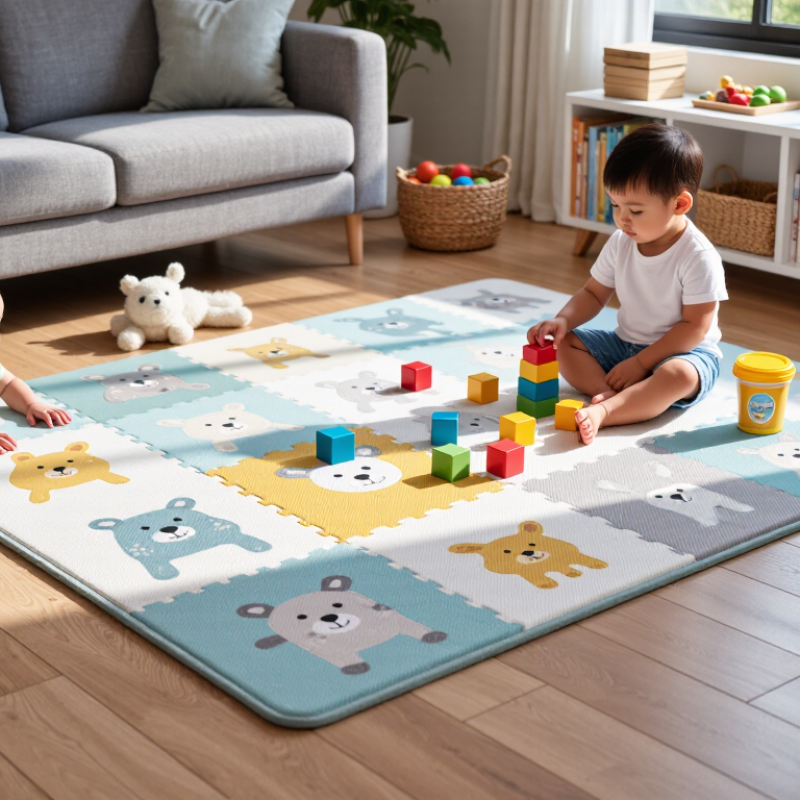
Choosing a Patterned Children Play Mat in 2026 means looking beyond cheerful colors. The mat should fit the room, the child’s activities, and the family’s cleaning routine. Picture a toddler stacking blocks beside a snack cup, or a baby rolling near the sofa. In those moments, useful details matter: a stable surface, clear care instructions, and dimensions that leave enough room to move. Patterns can make a play area feel inviting, but busy designs may show wear or compete with other room decor. A pretty mat can still be the wrong choice.

Start by checking the product’s material description, thickness, age guidance, and maintenance instructions. Look for specific information rather than broad claims such as “safe” or “easy to clean.” If a mat has a textured or non-slip backing, confirm how the manufacturer says to use it, especially on your flooring. Consider whether seams, folds, or raised edges could catch toys or little feet. Measure the play space before buying; even a generous mat can feel cramped under furniture. Small details count.

There is no single best option for every home. Some families prioritize wipe-clean surfaces, while others prefer a softer feel or a quieter pattern. Trade-offs are normal, and product descriptions do not always show how a mat behaves after months of use. This guide explores practical ways to compare patterned mats, read specifications, and choose one that suits your child’s everyday play—not just the product photo.
How to Choose the Best Patterned Children Play Mat in 2026

Define the Child’s Age, Play Activities, and Available Floor Space

Before choosing a patterned children’s play mat, match it to the child’s age and likely activities. A baby needs a clean, firm surface for supervised floor play, while a toddler may need room to crawl, stack blocks, or roll a toy truck. The World Health Organization’s 2019 guidelines recommend at least 180 minutes of varied physical activity daily for children aged 3–4, including 60 minutes at moderate-to-vigorous intensity. A mat cannot replace outdoor movement, but it can make indoor play more inviting. Busy patterns may also hide crumbs. I would keep the design cheerful, not visually overwhelming.

Tips: Measure the usable floor area, then leave space around the mat for walking and furniture. Check where doors swing and drawers open. If play includes building blocks, choose a surface that feels stable under small hands. For tumbling, look for appropriate cushioning, but do not assume a thicker mat is automatically safer. Supervise play, especially with infants.

Think about how the mat will be used on an ordinary weekday, not only how it looks in a product photo. A small corner may suit quiet books and puzzles; active crawling needs more open space. I would remeasure after moving furniture—room plans change, and my first estimate is not always right. Choose a pattern that helps define the play area without distracting from toys or making the floor feel crowded.

How to Choose the Best Patterned Children’s Play Mat in 2026

Compare example mat footprints to help match a child’s age, play activities, and available floor space.

How to use this chart: Smaller mats can suit babies’ supervised floor play or compact spaces; larger mats leave more room for crawling, toys, and active play. Measure your usable floor area first, then choose a mat that fits without blocking walkways. Areas shown are calculated from the example dimensions and are not age-based safety recommendations.

Screen Materials Against CPSIA Limits: 100 ppm Lead and 0.1% Phthalates

How to Choose the Best Patterned Children Play Mat in 2026

A cheerful print is not proof of a safer mat. Ask what the pattern is made from: surface ink, coating, backing, and plastic trim may each need attention. Under CPSIA rules, accessible component parts generally cannot exceed 100 ppm total lead. For applicable children’s toys and child-care articles, each of eight restricted phthalates is limited to 0.1% (1,000 ppm). These figures come from U.S. Consumer Product Safety Commission guidance and regulations, including 16 CFR Part 1307. Product classification matters, so a supplier should explain which requirements apply to the mat’s intended use.

Request the Children’s Product Certificate and supporting third-party laboratory reports. Check that the tested sample matches the finished mat, including its printed surface and underside—not just the raw fabric. Small details matter. A bright design can use different inks across colorways, and a report for one version may not cover another. I would ask for the test date, sample identification, and lab scope; paperwork can look complete while leaving gaps.

Look closely at seams and rubbed edges, where layers may separate after repeated play. Prefer clear material descriptions and traceable batch information. If answers are vague, pause before buying. A label alone cannot verify chemical limits, and no single test answers every safety question. In 2026, pattern choice should include evidence, not just color.

Check Applicable ASTM F963 Toy-Safety Testing and Product Documentation

A patterned play mat may look like a simple floor cushion, but its intended use matters. If it is marketed as a toy, ask whether applicable ASTM F963 requirements were assessed for that exact product. ASTM F963 is a U.S. toy-safety standard, and not every mat automatically falls within its scope. Check the age grading and intended-use description against the product documentation. Small details matter.

Request a dated test report or clear compliance statement, not just a badge on a webpage. The report should identify the tested model, materials, print, and relevant ASTM F963 edition or sections. Confirm who performed the testing and whether it covers the finished mat, including coatings, seams, and printed inks. A report for a similar design may not answer the question. Patterns can mean different inks; construction can vary too.

Read the warnings, care instructions, and product labels alongside the report. Look for model identifiers, age guidance, and instructions about supervision or floor use. If the seller cannot connect the paperwork to the exact item, ask in writing before buying. Keep the response with your receipt. Documentation cannot eliminate every risk, and it should not be treated as a guarantee. Still, it helps you ask sharper questions. We can sometimes focus too much on the pattern.

Compare Pattern Contrast, Surface Grip, Cushioning, and Ease of Cleaning

When choosing a patterned children’s play mat, check contrast at floor level, not just in product photos. Clear shapes and moderate contrast can help children distinguish play zones, while busy, high-contrast prints may compete with toys and books. Surface grip matters just as much: press a palm against the mat, then test it on the actual floor. A mat that shifts under a crawling child is not made safe by a cheerful pattern. Small details matter. The U.S. Consumer Product Safety Commission estimated 231,700 toy-related injuries treated in emergency departments in 2023; that figure covers toys broadly, not play mats specifically, but it reinforces the value of checking the whole play area.

Cushioning is a trade-off. A thicker surface may soften ordinary tumbles, yet it can make standing and walking less steady for new walkers. ASTM F1292 measures impact attenuation for playground surfacing; it is useful context, but it does not certify a home mat for every fall or floor. Look for clear material and care information, then check seams and edges for curling. For cleaning, compare the maker’s stated instructions with real life: spilled milk and crayon marks are different tests. A wipe-clean surface is convenient, but textured grooves can hold crumbs. I still find that point easy to overlook. Choose a pattern you can inspect, a surface that stays put, and a cleaning routine you can actually keep.

How to Choose the Best Patterned Children Play Mat in 2026 - Compare Pattern Contrast, Surface Grip, Cushioning, and Ease of Cleaning

General material and construction comparisons. Actual grip, cushioning, and cleaning requirements vary by product design, floor type, and care instructions.
Mat type Pattern contrast Surface grip Cushioning Ease of cleaning Useful checks before buying
EVA foam interlocking tiles Often available in bold colors and geometric designs. Contrast depends on the printed or molded pattern. Textured surfaces can improve footing, but tile seams and smooth finishes may feel different underfoot. Check stability on your floor. Provides a soft layer for floor play; thickness and firmness vary by tile. Individual tiles can usually be wiped. Seams may collect crumbs or liquid, so take tiles apart for a thorough clean when needed. Check tile thickness, edge pieces, fit, and the manufacturer’s cleaning and material guidance.
Foldable XPE foam mat Commonly offered with printed scenes, shapes, or two-sided designs; small details may be harder to see from across a room. Embossed textures may add traction, though grip depends on the mat finish and the floor beneath it. Foam construction cushions everyday floor play; compare thickness and firmness rather than relying on material name alone. A continuous surface is generally easy to wipe. Fold lines should be opened and dried if moisture gets into them. Look for a fold that is easy to manage, clear care instructions, and a size that fits your play area.
PVC-covered foam mat Printed patterns can have crisp outlines and strong color contrast; the surface finish may affect how colors appear. Smooth covers can be slippery, especially with socks. Check for a textured finish and test placement on the intended floor. Foam beneath the cover provides padding; support varies with the foam core and overall construction. The covered surface is typically wipeable. Avoid cleaners or soaking unless permitted by the care label. Review surface texture, seam construction, material disclosures, and cleaning directions.
Quilted fabric play mat Fabric prints range from subtle to high-contrast; busy designs can make small toys harder to spot. Fabric can feel less slick than a smooth coated surface, but the underside may slide on hard floors unless it has a suitable backing. Quilting adds light cushioning; it is generally softer and less structured than a thick foam mat. Some mats are machine washable, while others require spot cleaning. Follow the care label and allow the mat to dry fully. Check washability, drying time, backing grip, and whether the mat keeps its shape after laundering.
Natural rubber play mat Patterns are often molded or printed in a restrained style; contrast and design options vary by surface treatment. Rubber surfaces can offer useful traction, but performance depends on texture, floor finish, and whether the mat stays flat. Provides a firm, cushioned layer; softness and thickness differ between designs. Usually suited to surface cleaning, but check care instructions. Some rubber products may have a noticeable initial odor. Confirm material composition, odor guidance, cleaning method, and suitability for the child’s age and use.

Quick selection tip: Choose a pattern that is easy to see without being visually overwhelming, then prioritize a stable fit, appropriate cushioning, and care instructions that match your daily routine.

Verify Mat Dimensions, Care Instructions, and Material Certifications

Before buying a patterned children’s play mat, measure the usable floor area, not the empty-looking space. A 120-by-180-centimetre mat needs extra clearance for nearby furniture and doors. Check thickness and edge shape, too; a curled corner can catch a crawling child’s hand. It is easy to trust a room’s visual estimate. That can be a mistake. I would measure twice, then compare those numbers with the mat’s listed dimensions.

Read care instructions for both the cover and the inner layer. A wipe-clean surface may still need prompt drying after spills, while a removable cover can simplify routine washing. Check whether repeated cleaning affects printed patterns or grip. For materials, look for a current, independent certification that names the exact product and covers emissions or chemical testing. The U.S. Environmental Protection Agency’s indoor-air guide reports that indoor pollutant concentrations are often two to five times outdoor levels. That broad finding is not specific to play mats, but it makes emissions documentation worth checking. A certificate is useful only when its scope, test date, and product match are clear. Small detail. Big difference.